Good morning, traders…
Back in college, I played Division I basketball.
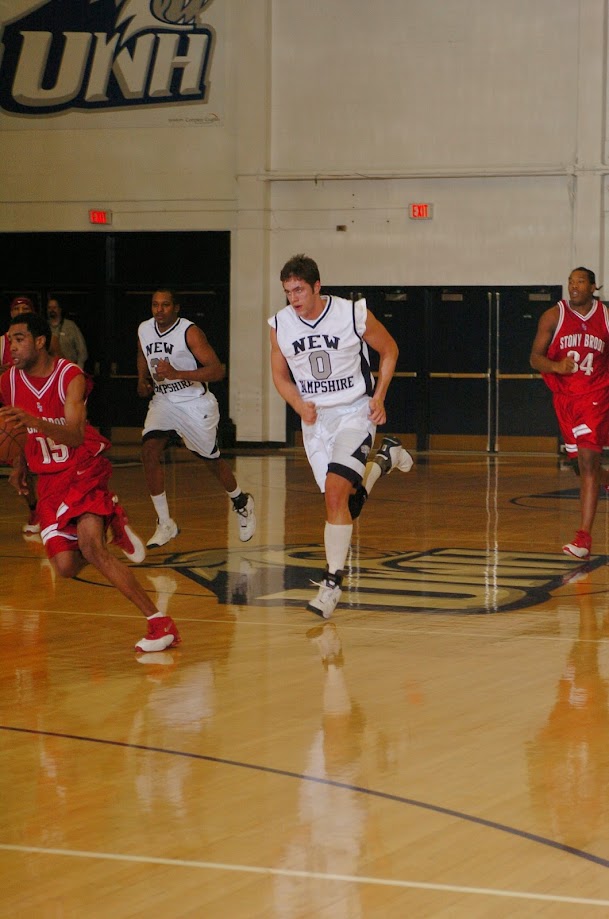
I wasn’t the star player lighting up the scoreboard. I was the guy making sure the star didn’t end up in the wrong place at the wrong time.
I did the dirty work. Defense. Screens. Box outs.
That role taught me something most people miss: basketball is less about the shot itself and more about the questions you answer before the shot occurs.
A great tactical play doesn’t come down to what’s drawn up in the locker room. It’s all the “what ifs” that pop up along the way.
What if the point guard gets trapped? What if the pass doesn’t get there? What if there are five seconds left and no one’s open?
You can’t freeze. You can’t guess. You have to know the solution before the “what if” ruins your play.
The same goes for trading.
Yet still, too many traders get tunnel vision on finding “the trade itself.” The chart. The setup. The entry.
But finding a trade is only half the battle.
Once you’re in the trade, if you aren’t prepared for any (and every) scenario that could possibly go wrong, the entire play is at risk.
Traders win or lose based on how well they’ve answered one simple question before they ever click buy.
Let’s Answer The 5 Biggest “What If” Questions (So You Never Need To Guess What To Do)…
What if the chart moves against you right away?
Look at a chart of the contract’s expected gains (every brokerage platform offers these). See the projected options price if the underlying stock drops by 5%, 10%, or even 20%. Where does your planned stop-loss hit on the diagram? Knowing this tells you the maximum dollar amount you’ll lose if your trade fails immediately. Let’s say you buy a call option. The stock drops 5%. Does your option lose 10% of its value? 20%? More? This early test helps you find the right entry and exit points.
Solution: Set Your Stop-Loss Before The Trade.
Always decide your maximum loss before you buy. Find the stock price where your option reaches your maximum acceptable dollar loss — that’s your stop-loss trigger. For options, your stop-loss should be set to a % loss on the option’s premium (no more than 30% of what you paid). If the chart moves against you, so be it. You knew your stop, you were comfortable with the risk, and it didn’t work out. On to the next one.
What if your underlying price target hits, but the option price is lower than expected?
Sometimes, the underlying stock hits your price target, but your option’s price doesn’t reflect the profit you hoped for. This is usually due to time decay accelerating or implied volatility (IV) dropping. Reaching the underlying stock price target doesn’t always guarantee your expected option profit.
Solution: Include Time and Volatility In Your Trade Plan
Anytime you set a profit target, write down when you expect the stock to hit it. Use a simple P&L diagram to estimate your expected profit at your target stock price, say, in 1 week, 2 weeks, or a month. And don’t ignore IV. If you buy an option before big news, IV will drop afterward. Plan for that post-event “IV crush” by checking the option premiums at lower IV levels.
What if your target hits right after your contract expires?
Imagine you buy an option with three months until expiration. You expect a big move. But maybe the stock slowly grinds sideways. Or the big move doesn’t happen until the last week. Time decay gets more severe as the contract nears expiration. This acceleration can surprise you.
Solution: Buy More Time
If you consistently notice your targets hit after your contract expires, consider buying options with longer expirations, like LEAPS (Long-term Equity Anticipation Securities). These options suffer less from daily time decay. You pay more upfront, but you gain crucial time for your trade to play out.
What if a major news event happens unexpectedly?
Think about a surprise FDA announcement for a biotech stock you hold, or a sudden interest rate hike from the Fed. How does your option react to an unexpected event? Does it wipe out your entire premium, or does your spread limit your loss? This makes you consider hedging or avoiding trades around major, unpredictable news.
Solution: Avoid High-Risk Event Periods
The simplest solution is right in front of you. Don’t hold options through major events with unpredictable outcomes (like scheduled Fed announcements, 50/50 earnings moves, or clinical trial results). The risk is too high. Trade after the news breaks, not before. One exception: If something completely unforeseeable happens (like a natural disaster, military attack, or virus breakout) … there’s nothing you can do beforehand. You never know what the news will serve up next, you just have to manage the setup from there. That’s part of the game.
What if you miss your planned exit?
Sometimes, the market moves too fast. Your target price arrives, but you’re away from your screen. How much more could you lose (or give back in profit) if you can’t exit exactly when you want?
Solution: “One Cancels the Other” Orders
Set a “one cancels the other” (OCO) order — where you place a stop-loss order and a profit-taking limit sell order at the same time. If one executes, the other automatically cancels. That way, you’ll never miss an exit just because you went to get a cup of coffee.
REMEMBER: Every trade you take is like running a play.
You don’t control the clock. You don’t control the defense. You don’t even control whether the ball bounces your way.
But you do control how well you prepare.
Answer the “what if” questions before the trade, and you won’t panic mid-play. You won’t freeze when things go sideways.
You’ll know where to cut, where to take gains, and when to walk away.
Happy trading,
Ben Sturgill
P.S. Since launching my OMEN Scanner, I’ve achieved an 89% win rate with a 72% average gain…*
My top 120 trades have all generated 100% or higher. 27 soared above 200%, and 12 exploded beyond 300%…*
But my biggest trade yet could be setting up RIGHT NOW.
Join Danny Phee this THURSDAY, August 7 at 9:00 a.m. EST for a LIVE WORKSHOP where he’ll go over our best trade ideas in the options market.
Stop missing triple-digit wins — Click here to sign up before it’s too late.
*Past performance does not indicate future results