Good morning, traders…
It’s December 26th, the first day of the seasonal Santa Claus Rally window.
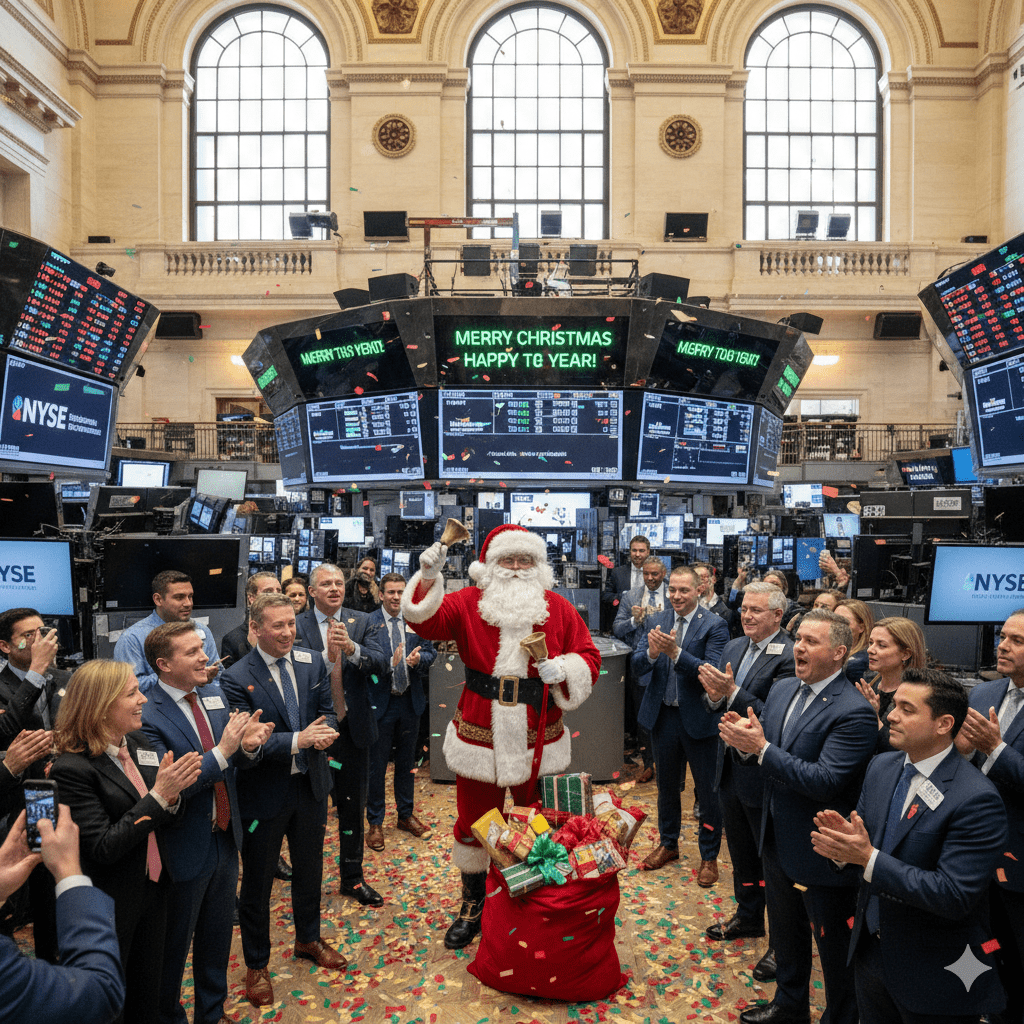
This is one of the most reliable seasonal patterns in the stock market, covering the last five trading days of December and the first two trading days of January.
Historically, the S&P 500 has delivered positive returns during this window 79% of the time.
The average gain during this window: 1.2%.
That might not sound like much, but…
When you’re trading options, a 1.3% move in SPY can turn into 50%, 100%, or even 200%+ gains on properly positioned calls.
But to get properly positioned, you need to know the context you’re trading within.
You need to understand what the Santa Claus Rally actually is, why it happens, and how to position yourself, because…
The Santa Claus Rally Window Just Opened…
But It Won’t Stay Open For Long.
You Have 7 Days To Weaponize This Pattern … Starting Right Now.
What The Santa Claus Rally Is
The Santa Claus Rally is a historical pattern where U.S. stock markets tend to rise during a specific end-of-year period.
The window covers the last 5 trading days of December and the first 2 trading days of January. That’s 7 total trading days.
This pattern shows up in major indices like the S&P 500, Dow Jones Industrial Average, and Nasdaq Composite.
The term was first popularized in The Stock Trader’s Almanac by Yale Hirsch in the early 1970s. Traders have been tracking this pattern for over 50 years.
The S&P 500 has posted positive returns during the Santa Claus Rally window in about 76-79% of years historically.
4 Theories Why The Rally Happens
Nobody knows for sure why this pattern exists, but 4 common explanations make sense:
Lower institutional volume. Traders and investors go on vacation around Christmas. That reduces selling pressure.
Year-end portfolio rebalancing and window dressing. Portfolio managers buy strong performers and dump losers before year-end statements go out. They want their portfolios to look good on paper. That creates buying pressure in quality names.
Tax-loss harvesting winds down. In November and early December, investors sell losing positions to offset capital gains for tax purposes. By late December, that selling pressure is over, giving buyers the perfect opportunity to step back in.
Holiday season optimism and cash inflows. Year-end bonuses get paid, holiday sentiment shifts positively, and retail investors have more cash to deploy. This often adds “Main Street fuel” to the Wall Street rally.
The historical data clearly shows a positive tilt during this window.
But the magnitude varies, and not every year delivers…
WARNING: The Rally Is NOT Guaranteed
Even though this pattern plays out 8 out of 10 times, you can’t just assume it will happen this year.
The pattern is probabilistic, not deterministic.
Some years produce a rally. Others don’t.
Last year was a prime example of the latter:
The S&P 500 declined in December 2024, losing approximately 2.4% for the month, despite a strong full-year gain of 23.3%.
Analysts noted a “reverse Santa Claus Rally,” where the S&P 500 sold off on every business day between Christmas and New Year’s, which was historic and unprecedented.
Market structure, macro conditions, and volatility can suppress or delay the rally effect.
The historical tendency to rise is real, but the pattern has variability.
Translation: Don’t blindly buy calls today expecting free money.
You still need confirmation from price action and Smart Money flow.
How To Trade The Santa Claus Rally
We’re on day 1 of the Santa Claus Rally window.
But don’t assume the rally will happen just because it’s the right time of year. Watch for confirmation first.
Look for Smart Money flow into SPY, QQQ, and sector-leading names. If institutions aren’t buying, the rally won’t happen.
But if we see strong buying into the close today (with a low VIX), that’s confirmation that the pattern might be activating.
The pattern has worked 76-79% of the time historically. But you still need to confirm the market is actually following the script.
Trade the setup, not the calendar.
Happy trading,
Ben Sturgill
*Past performance does not indicate future results