September inflation data just dropped, and it came in hotter than Wall Street expected.
Anyone who’s filled up their tank or pushed a cart through the grocery store lately, they’ve already felt it. Goods are getting more expensive.
How do we trade in these market conditions?
Pull up a chair…

Make no mistake, the war with Iran is a big reason prices are climbing. We’re in the seventh month of an oil-choking conflict overseas. Nobody expected it to last this long. Least of all, Trump. But here we are…
Every day without a permanent peace deal pushes the timeline for elevated prices further and further.
On Wednesday, October 14, the International Energy Agency (IEA) said the diesel squeeze is set to last well into 2027.
Diesel is one of the most consequential factors in global inflation. It powers the trucks and heavy machinery that move goods around the world. Every time you buy a gallon of milk, diesel costs are part of the price.
And the timing for sticky inflation couldn’t be worse. The holidays are right around the corner.
What should traders do about it? My answer might surprise you.
The CPI: Hotter Where It Counts
The Fed’s inflation target is 2%.
Its preferred gauge is the Personal Consumption Expenditures (PCE) index, but the Consumer Price Index (CPI) is watched just as closely and hits our wallets more directly.
Yesterday’s report was a problem because a big part of the miss was in core inflation, the number that strips out volatile food and energy.
Why does the core matter so much? Bulls have been arguing that the headline number is high because of oil, and the “real” inflation underneath is fine.
A hotter core reading disproves that argument.
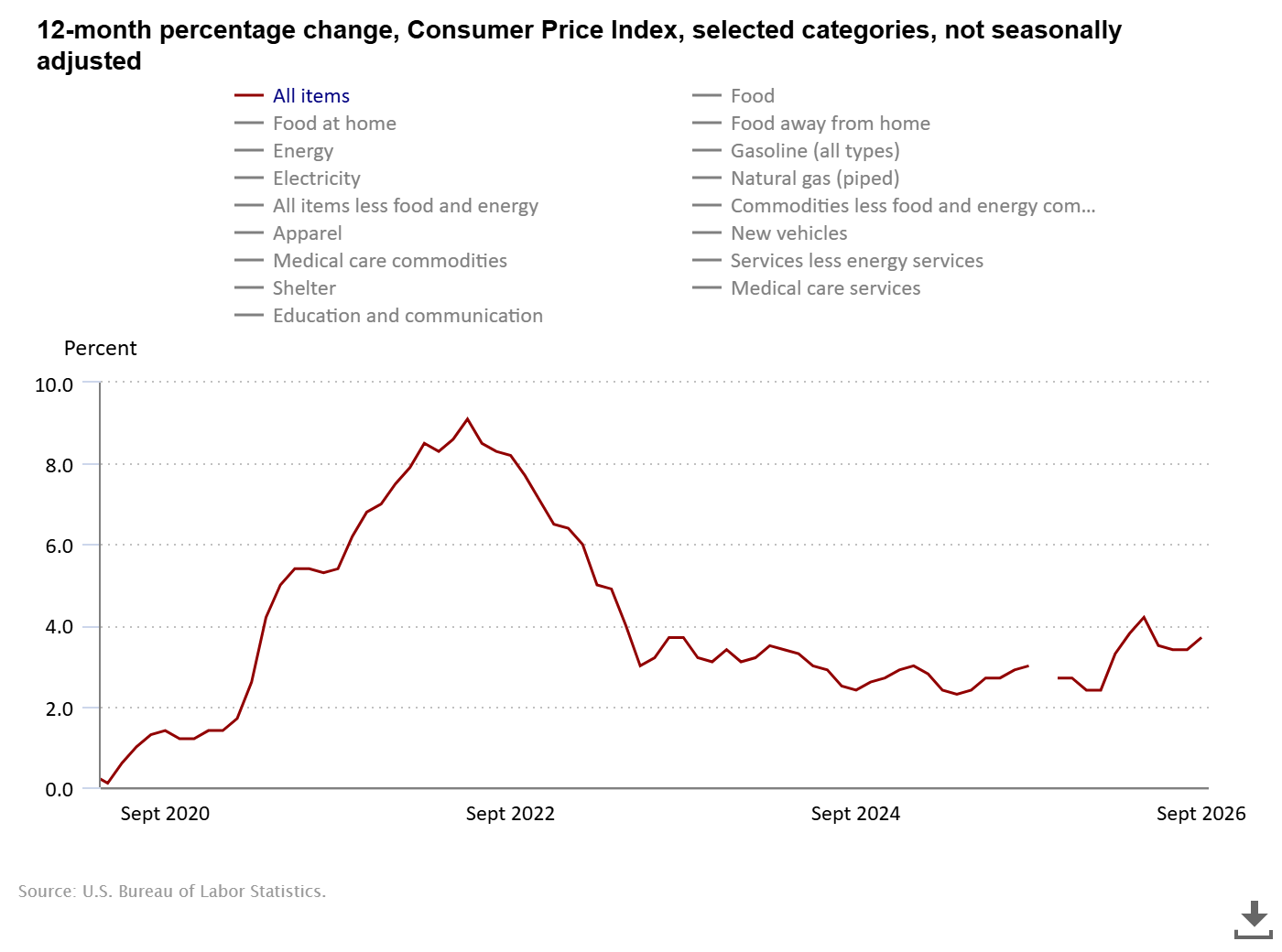
The U.S. hasn’t seen CPI at or below the Fed’s 2% target since late 2020, early 2021.
The chart below shows the year-over-year change since 2020. The post-COVID spike is a stimulus outlier, but it’s a useful history lesson.
After years of grinding lower, inflation is turning back up.
Why It Matters: The Fed Is Boxed In
The Fed fights inflation by adjusting interest rates, the cost of borrowing. When prices rise too fast, the Fed raises rates to discourage borrowing. That cools spending, and weaker demand forces inflation to slow down.
Still with me?
Here’s where today’s report really bit. Before the CPI release, the market was pricing roughly an 80% chance the Fed will hold rates steady at its October 28 meeting.
After the CPI, futures now show about a 94% chance of a rate hike before year-end.
That puts Fed Chair Kevin Warsh in a tough spot. A rate hike heading into midterm elections isn’t popular. The market doesn’t know which way he’ll lean. And if there’s one thing the market hates, it’s uncertainty.
That’s the big picture.
When everyone’s talking about the economy at Thanksgiving, you can rest easy.
You are now “in the know.”
But the part that really matters: how are we going to trade in an uncertain market?
My Game Plan
Honestly, I won’t be trading much…
That might sound strange coming from a professional trader. But here’s how I see it: patience is a position. I’m waiting for the conditions I want.
And until the market shows its hand, I’m chilling like a villain.
That isn’t fear talking. I’m being realistic.
Here’s what I see on the chart:
- The S&P 500 ETF Trust (NYSE: SPY) is consolidating. Since the August run-up, it’s traded between roughly $760 and $780, a range of about 3%.
- There’s a short-term gap below, near $765. Markets love to fill gaps, and I think SPY may be heading there.
- The VIX is rising, but it isn’t panicking. It jumped from about 15 to 16.91 after the CPI data, a big move. But it’s still inside a wedge. A breakout above 17.59 would be a different story.
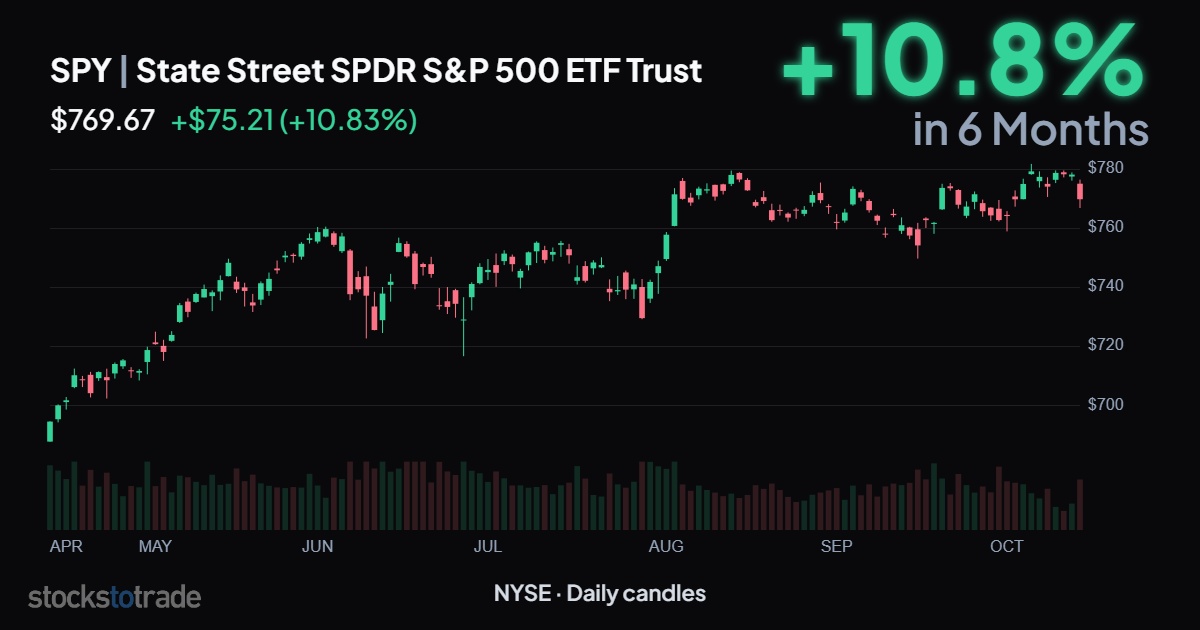
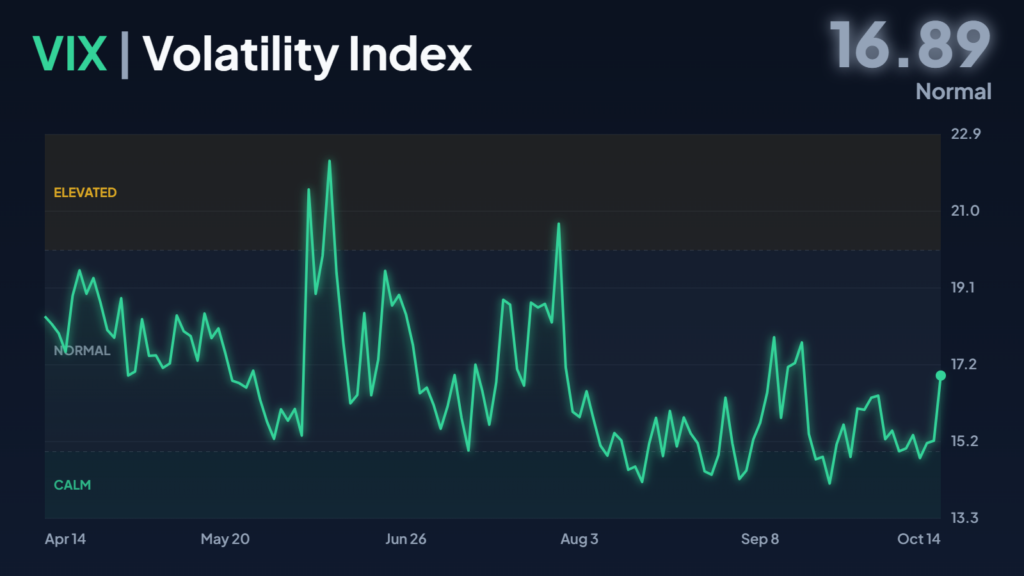
The overall trend in the market is still bullish. But inside that trend, we’re going nowhere fast.
This kind of chop chews up accounts. Breakouts fail, breakdowns reverse, and every trade feels like a coin flip.
I prefer to wait for a real trend.
And catalysts that could break the stalemate are still ahead of us. Producer prices (PPI) lands today. Then comes unemployment claims, consumer sentiment, and finally the Fed’s decision on October 28.
Until then, the market is left guessing.
There’s a time to fish and a time to cut bait.
Save yourself until the market gives us better setups.
Be good (and be good to others),
Ben Sturgill
*Past performance does not indicate future results. Not typical.