Good morning, traders…
The S&P 500 dropped 1.5% yesterday in another volatile session.
But if your account suffered a big drawdown, there’s a bigger problem at hand…
You’re fragile.
And to win in the long term, you need to be the opposite:
Antifragile.
The concept of antifragility was developed by Nassim Nicholas Taleb, a former professional options trader/risk analyst turned writer/philosopher.
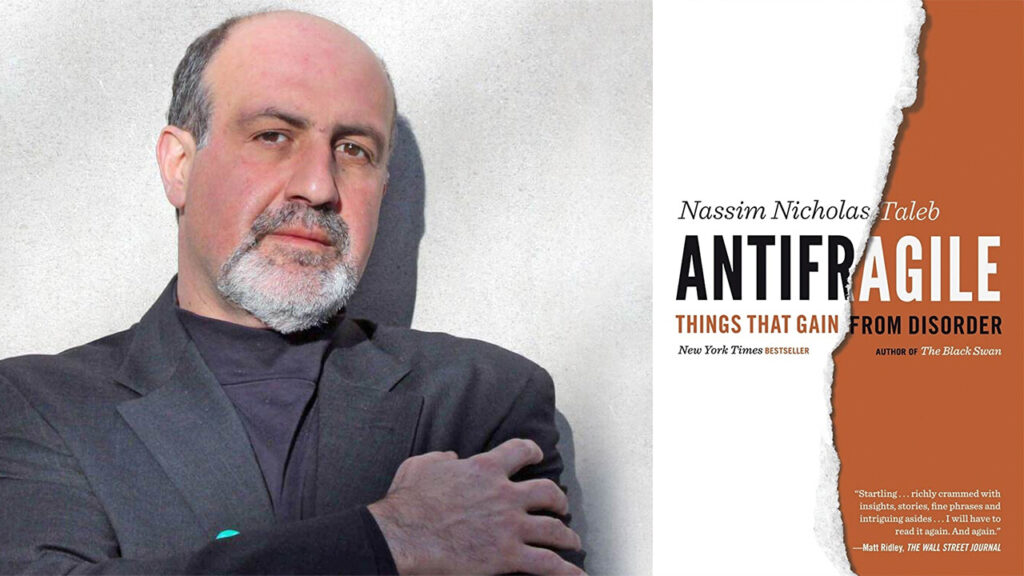
His idea is simple: Some things break under pressure. Some things withstand pressure. And some things get stronger because of it.
That last group is antifragile (what you want to be as a trader).
The human body is a perfect example. If you never put stress on your muscles, they weaken. If you never challenge your immune system, it becomes susceptible to viruses.
But if you introduce small, controlled stress (physical exercise or exposure to germs), your body adapts.
In contrast, the vast majority of brokerage accounts are fragile. They’re like a weak body sitting on a house of cards. Like a glass canon.
They might look stable, but the slightest disturbance will blow them up.
You now have a choice: let the chaos break your process, or use it to sharpen your edge.
Become An Antifragile Trader … Or Else.
How Taleb Developed Antifragility
Antifragility means your portfolio doesn’t just survive volatility events, but actually benefits from them.
Markets (and life) are full of randomness. Unexpected events, sudden downturns, and unpredictable moves are always looming on the horizon.
An antifragile trader builds a system that thrives in these conditions.
Taleb did this by structuring his portfolio to profit from extreme market movements, regardless of direction.
Instead of betting on stability, he positioned himself to benefit from uncertainty.
His approach was based on barbell strategy thinking:
- One side of the portfolio was ultra-conservative. Cash, safe investments, and limited downside. This prevented major losses.
- The other side had asymmetrical bets. He would hold massive amounts of OTM (out-of-the-money) options, which pay off massively in rare (but extreme) market events.
By doing this, Taleb ensured that no single market shock could wipe him out.
In fact, extreme volatility (the very thing that destroys most traders) built his entire fortune.
Most famously, Taleb predicted the subprime mortgage crisis in his 2007 book, The Black Swan.
The book was such a crystal-ball phenomenon that “black swan” has become a catch-all phrase for unexpected market events.
But Taleb’s ‘08 call wasn’t some “One Hit Wonder.”
He kept executing his antifragile strategy with remarkable success.
In 2015, Taleb was holding cheap, OTM SPY puts and VIX calls as SPY tanked 8% and the VIX surged 50%.
His entire portfolio increased by 20% while he profited more than $1 billion in a single day (entirely on bearish options contracts).
Antifragile traders don’t just hedge against risk. They position themselves to gain from randomness and skew.
Most traders blow up because they chase short-term results without considering the big picture.
Taleb’s strategy was the opposite: he accepted small, controlled losses while waiting for a big move that would make those losses irrelevant.
You can apply this same thinking to your trading.
Instead of trying to predict every move, position yourself to benefit from the unexpected:
- Keep a portion of your portfolio hedged. If you’re holding several calls at a time, hedge those contracts with SPY or QQQ puts.
- Use options to make small, asymmetric bets that can pay off massively in extreme scenarios.
- Carefully consider your max risk (so one bad trade never takes you out of the game).
When you trade with antifragility, volatility goes from being an endless nightmare to an undeniable opportunity.
The Antifragile Mindset
The market is designed to work against your natural instincts.
Your brain is wired for survival. When things look dangerous, you run. When something seems like a sure thing, you chase it.
That’s normal. It’s human.
But in the options market, those instincts will ruin you.
This is why you must train yourself to think differently from the average trader…
At every moment, with every trade, ask yourself:
- Am I making this decision based on emotion?
- Is this the typical human response to this situation?
If the answer is yes, pause.
Don’t react. Respond.
Instead of emotions, use a system:
- What’s the risk? (This keeps greed in check.)
- What’s the plan? (A solid plan removes emotional swings.)
- What’s the best way to execute? (This helps you follow through even when your emotions scream at you to do the opposite.)
When you trade with a plan, you don’t have to rely on willpower in the moment. The decision has already been made. All you do is execute.
Risk Management as Antifragility
Fragile traders think about reward. Antifragile traders think about risk.
If you don’t manage risk, you will blow up your account.
When that happens, game over. You’re never getting that money back.
But there’s a simple way to avoid this: Define your risk before you enter a trade.
For example:
“If I get into this trade at $100, I’ll get out at $98.”
That’s $2 of risk. If you can accept that, take the trade. If not, pass.
Antifragile traders don’t hope. They don’t guess. They don’t chase.
They define risk. Accept the risk. And execute their plan.
Antifragility Beyond Trading
Antifragility has benefits beyond your trading account.
- A fragile person avoids challenges (and crumbles at the sight of them).
- A resilient person can handle stress (but doesn’t necessarily grow from it).
- An antifragile person seeks out the discomfort, knowing they’ll emerge stronger.
Antifragility is the foundation of great athletes, great entrepreneurs, and great traders.
Tour de France champion cyclist, Greg LeMond, was once asked, “Does it get easier?”
He answered, “No. You just get faster.”
The same goes for trading. The market won’t get easier.
But you can get better…
You can become antifragile.
Happy trading,
Ben Sturgill
*Past performance does not indicate future results