
Good morning, traders…
Yesterday, I bought the same contracts twice in one session.
One of my favorite stocks pulled back after my initial entry, testing support (but holding above my stop level).
Instead of getting nervous about the move, I used the pullback to add more contracts.
Same thesis, same setup, lower cost basis.
This is exactly what I’ve been talking about this year with my 2026 pullback philosophy.
We’re not chasing momentum into resistance anymore. We’re not panic-buying breakouts.
We’re building positions strategically as setups develop, waiting for the market to come to us (and adding size when we get better prices while our thesis stays intact).
The difference between reacting to price action and planning around it comes down to one thing: do you have a thesis before you enter, or are you making it up as you go?
If you know your entry level, your stop level, and why the setup works before you put capital at risk, pullbacks become opportunities.
You can add strategically because nothing about your thesis has changed … the price just got better.
That’s exactly what happened yesterday…
The Setup
I’ve been watching an Inverse Head and Shoulders pattern develop on NVIDIA Corp. (NASDAQ: NVDA).
If you’re not familiar with this pattern, it’s a bullish reversal setup that forms after a downtrend.
You get three lows: the first shoulder, a deeper low in the middle (the head), and then a second shoulder at roughly the same level as the first.
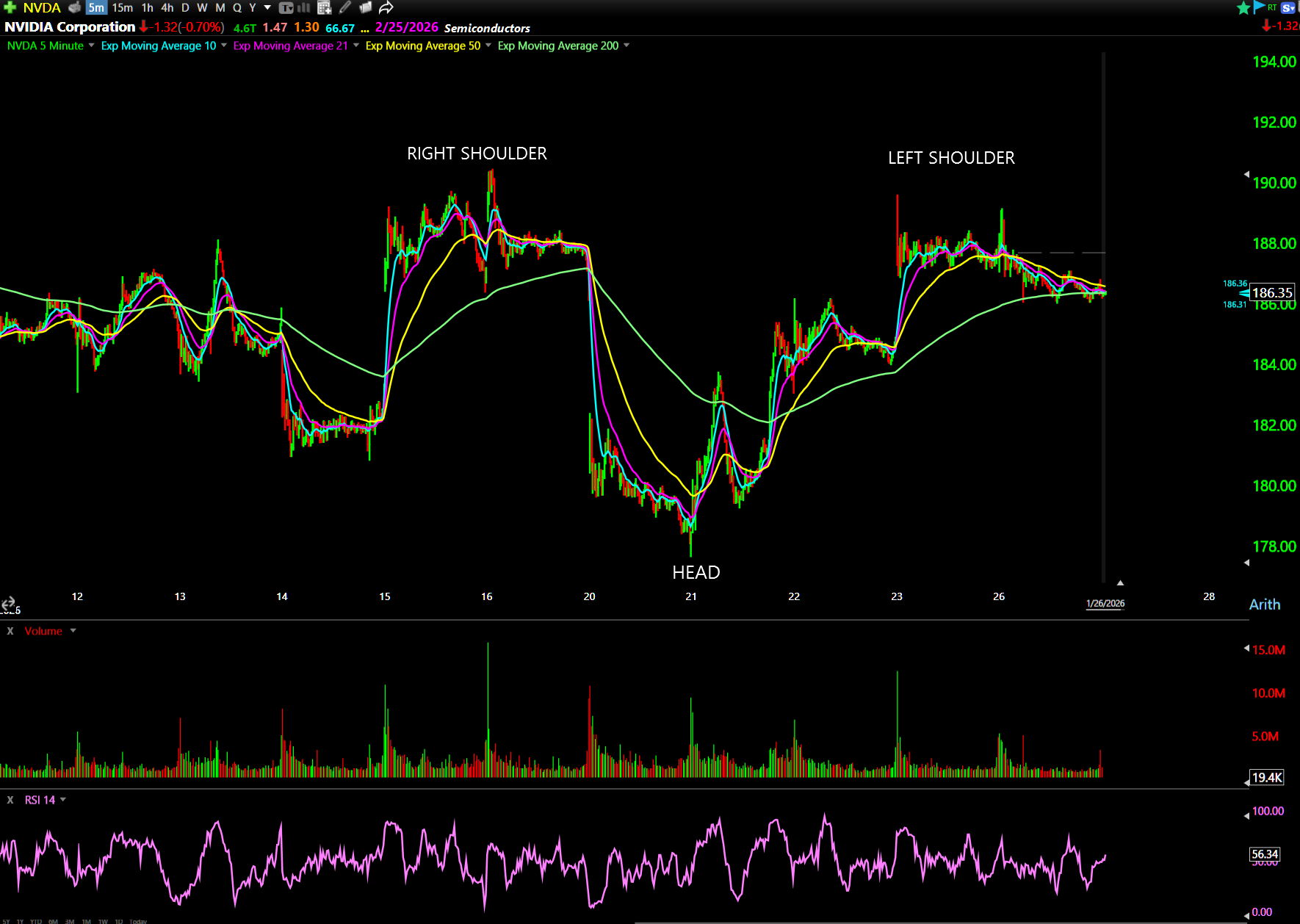
When price breaks above the neckline connecting the highs between those three lows, that’s the trigger…
The Trade
Yesterday I bought NVDA Feb 20 $200 Calls at the $187 level I called out earlier this week.
Entry was $6.10 per contract. My first target was $7.35, with stops at $5.00 or if NVDA breaks below $185.
Then later in the day, NVDA pulled back to $186. I added more of the same contracts at $5.60.
My initial entry at $187 gave me exposure to the setup at a level I was comfortable with (knowing I could add on a pullback).
When NVDA did pull back to $186 a few hours later, the stock held above my stop at $185.
The 21 EMA was sitting right there providing support:
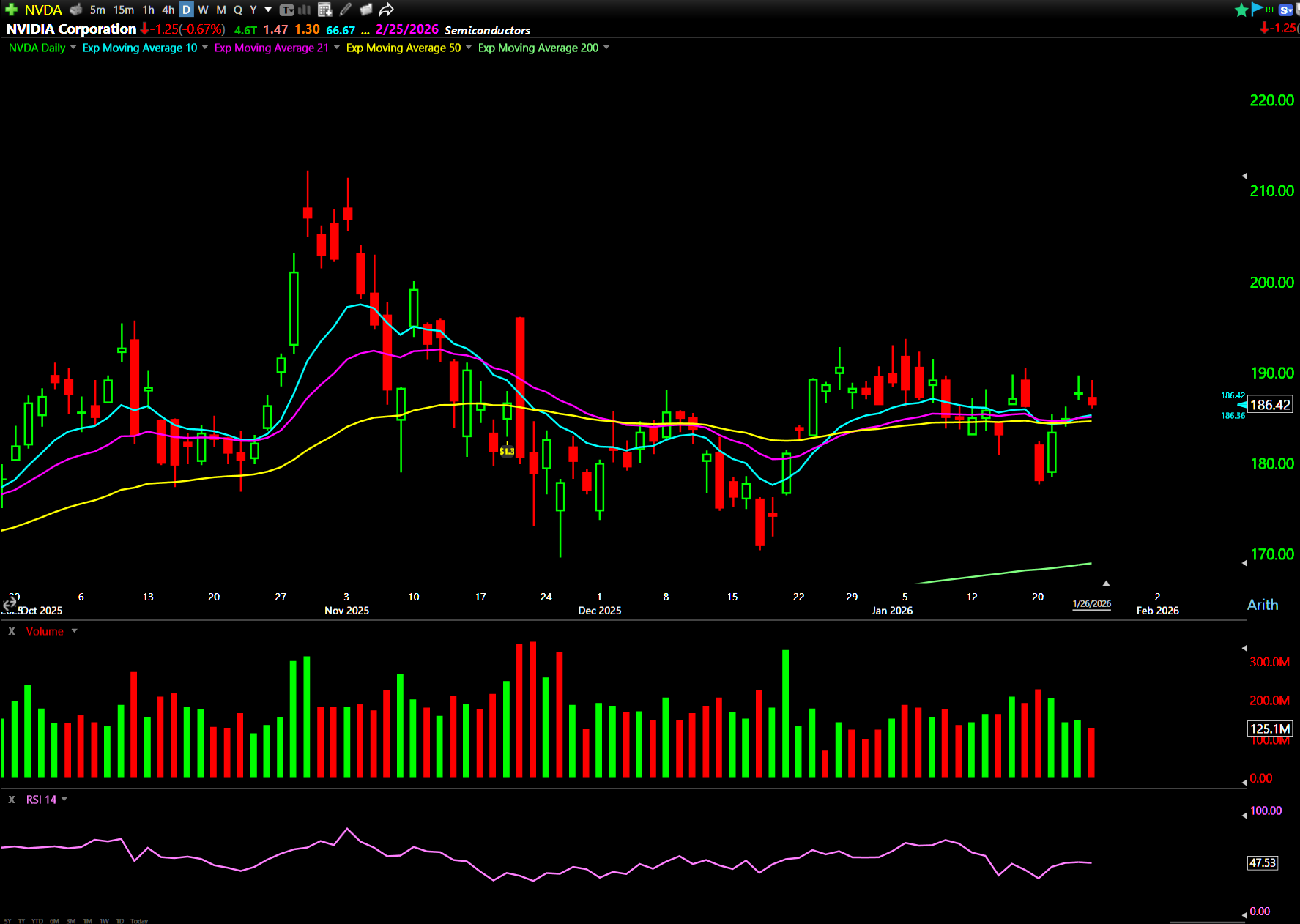
My thesis hadn’t changed. The broader pattern was still intact. And the contracts were 50 cents cheaper.
So I added to my position.
By adding at $5.60 when my first entry was $6.10, I brought my average cost basis down.
Now, instead of needing the contracts to hit $7.35 to reach my first target, my blended cost is lower, and I can take profits sooner.
The pullback improved my position without changing my stop level. My sizing gets larger as I get closer to my stop level. That’s how I manage risk.
And if NVDA breaks below $185, I’m out of the entire position with a small loss.
The Plan
See how clear my plan is?
By following that simple process, I’ve recently caught parabolic options moves, like:
+52% on AAPL (1 day)*
+100% on TSLA (same day)*
+215% on CMCSA (2 weeks)*
+100% on AAPL (1 day)*
+100% on META (same day)*
+200% on HOOD (2 days)*
+294% on GOOGL (4 days)*
If you don’t have a reliable trading system, you’re falling further behind every day.
That’s why I’m hosting a special 2-day Options Bootcamp, TODAY and TOMORROW only.
We’ll walk through the exact process I use to identify Smart Money positioning before moves happen, execute entries with proper timing, and manage exits for maximum gains.
Today is the first day of your financial future.
Don’t get left behind…
Happy trading,
Ben Sturgill
*Past performance does not indicate future results