
Good morning, traders…
I just heard a guy on CNBC say, “Diversification is everything.”
Nonsense.
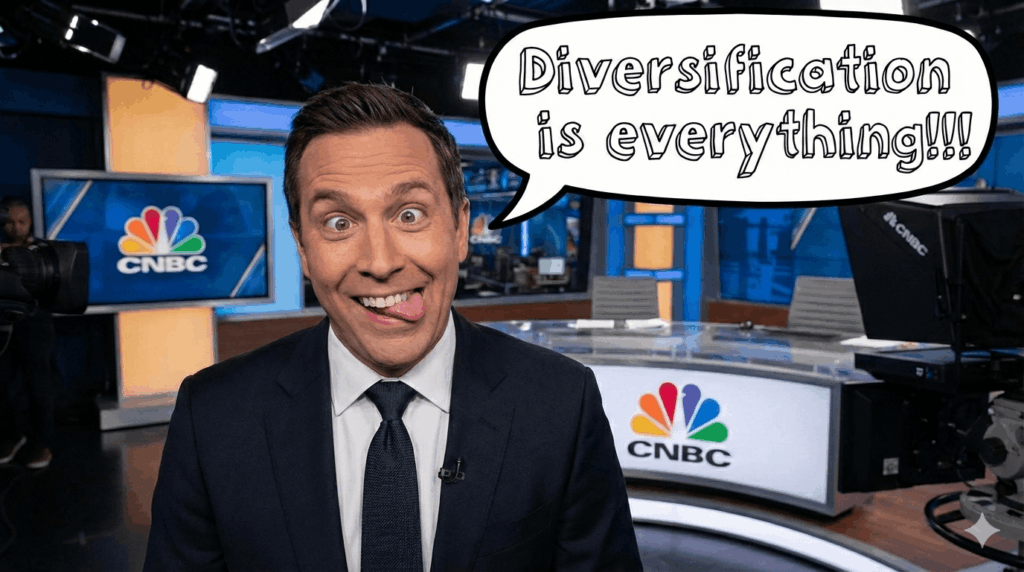
Diversification is for long-term, “buy-and-hold” investors who want to set it and forget it.
Maybe it works for them, maybe it doesn’t. That’s a debate for another day…
But for traders, over-diversification is a huge problem.
And for me, it’s personal. I learned this lesson viscerally in 2025.
I was spreading myself across too many positions at once. Seven or eight names open simultaneously, each one requiring attention, each one pulling focus.
My best returns came when I gave positions my full focus.
One of my major goals for 2026: trading fewer positions at once.
I want higher conviction on the absolute best setups. And I want you to look for the same.
Spreading yourself across five or ten positions kills your ability to zero in on what actually matters.
You tie up capital in mediocre trades while the perfect setup appears on your screen with nowhere to deploy.
The best traders in the world do the exact opposite…
The Problems With Diversification
The Attention Problem
Winning in the options market requires close attention.
If you’re not intently focused on your positions, important information can slip through the cracks.
And someone else will be out there out-focusing you.
When you over-diversify, you split a finite resource (your attention) across multiple positions. That makes it nearly impossible to manage the trades with the care they deserve.
If you’re spread across five mediocre trades, you’re unlikely to see that one ideal pullback.
The Aggression Problem
Let’s say you’ve diversified your trading.
You have five open positions, each making up 20% of your portfolio.
Then, in the middle of those trades, an obviously better setup appears on your screen.
You have two (bad) options:
- Cut one of the trades you’re already in, forcing a quick decision.
- Miss the new opportunity entirely.
You’re either exiting trades prematurely or watching a perfect setup pass you by.
The better move? Avoid the five mediocre trades entirely.
Wait for the setup that checks all of your boxes, then execute ruthlessly when it appears.
But don’t just take it from me.
Take it from a billionaire…
Stanley Druckenmiller is one of the greatest traders of all time.
His fund went 3 decades straight without a single red year, averaging 30% annualized returns the entire time.
Here’s what he said about diversification:
How To Avoid Over-Diversifying
I never would’ve generated the gains I’ve made over the past 22 years by passively diversifying into stocks.
My 100% gain on Nike came from close technical analysis.* My 828% gain on Google came only after stalking the chart for months.*
To make extraordinary returns, you must exercise extraordinary focus.
I go through the same process every morning:
- Scan premarket and sector tape.
- Identify unusual option orders.
- Map them to clean trigger levels (important price zones).
- Enter only if/when the trigger level confirms.
These steps lead to my best results, time and time again…
Start using the same scanner I run every morning to find high-probability setups in real-time.
Don’t splash paint. Use a fine brush.
Happy trading,
Ben Sturgill
*Past performance does not indicate future results