Good morning, traders…
Picture this…
The opening bell rings. The floor erupts. The roar is immediate.
It’s a pit. Sunken. Circular. Ringed with bodies in bright jackets. Blue, red, yellow, green. Each color marking a firm, a faction, a tribe.
Men don’t talk. They scream. Hands shoot into the air like weapons. Palms up to buy. Palms down to sell. Fingers flick, chop, and stab the air, desperate to get their message across.
Every face is red. Veins bulge from foreheads. Eyes scan in every direction, gauging the crowd, reading the numbers chalked on boards, assessing the twitch in a rival’s jaw.
The air smells like freshly minted bills. Like cologne, coffee, and cigarettes. Like cheap sandwiches stuffed in Docker pockets.
Hundreds of phones ringing at once create a cacophony of noise. Clerks dart between traders like bees, taking orders and passing them up to runners who quickly vanish into the stairwells.
There’s no silence. No calm. No stillness. The clang of the metal bell. The scrape of shoes. The slap of hands against chests when someone lands the perfect fill.
While it might sound like I just described a scene from a Martin Scorsese film, I didn’t.
I just described what options trading was like before technology took over:
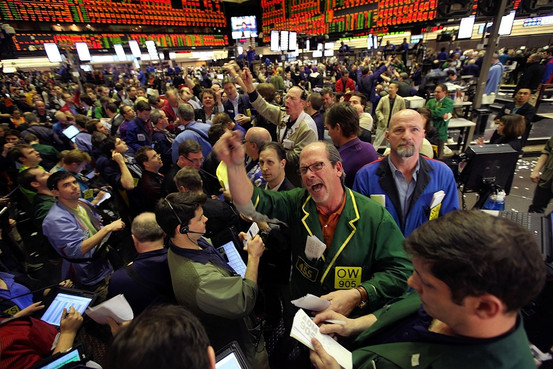
Does that sound like an environment you’d want to trade in? No? (Me either.)
It’s easy to forget how many trading advantages you enjoy in 2025.
Let Me Show You Why NOW Is The Best Time In History To Be A Trader…
Speed and Access
Then: To place a trade pre-2000, you had to call your broker. He then called someone else, who relayed it to the floor.
If they could find a buyer or seller, they shouted the order across a pit, wrote it on a card, and passed it back up the chain.
A five-minute delay was common. Ten wasn’t rare. On heavy volume days, fills could take hours.
Meanwhile, the price might’ve moved past your entry.
You never really knew until someone called you back.
Now: You click a button and your trade fills in milliseconds. You see it update instantly in your account.
You’re not just faster. With extended hours and global access, you don’t wait for the opening bell or sit out because you’re in the wrong time zone.
You have endless trading access at your fingertips anywhere in the world.
Information and Prices
Then: Quotes came from the newspaper or a teletype. You didn’t know the current price, you knew yesterday’s.
Research meant calling a company, requesting a report by mail, or visiting a library. Charting was done by hand.
Traders literally drew lines and calculated moving averages with a calculator and a pen.
If you wanted to test a strategy, you tracked it day by day with a notebook, a pencil, and a good eraser.
Now: Quotes stream to your screen in real time. Charts update with every tick. Research is one tab away.
You can pull SEC filings, earnings calls, insider buys, and analyst notes in seconds. Backtesting your strategy takes minutes, not weeks.
You don’t need to hunt for information. It finds you.
WARNING: This endless information access presents its own challenges (like sorting the signal from the noise).
Tools, Cost, and Community
Then: Simulated trading was writing imaginary trades in a notebook and checking the paper the next day to see if you were right.
If you wanted to analyze options, you needed a spreadsheet and maybe even a math degree.
Commissions were steep. Sometimes $50 or more round-trip. You needed thousands of dollars just to open an account.
If you didn’t know someone, you were learning by trial and error.
Now: You can practice in a live-sim environment for free. Brokers calculate the Greeks, probabilities, and break-even points for you.
Commissions are gone. You can start with a hundred bucks and you’ll be live trading in minutes.
And don’t forget about community.
In our trading community, you have access to mentorship, live rooms, and endless video lessons.
The only thing standing between you and success is yourself.
Trade Like You Don’t Have The Tools
All this access to information and technology is a gift. You’re lucky to be trading NOW. It’s a huge advantage that should be treated as such.
But don’t let it make you lazy.
Trade like it’s still hard. Pretend every trade costs $50. Pretend every indicator takes 20 minutes to plot. Act as if the technology won’t be your crutch, because it won’t.
I use tech to help me stay focused. I set alerts instead of watching screens all day. I backtest my strategies before I risk a dollar. I read online news every day.
And most importantly, technology allowed me to build my OMEN Scanner.
Since I started using my scanner DAILY, I’ve achieved an 89% win-rate with a 72% average gain…*
My top 120 trades have all generated 100% or higher. 27 soared above 200%, and 12 exploded beyond 300%…*
But my biggest trade yet could be setting up RIGHT NOW.
Join Danny Phee TODAY, JULY 10 at 7:00 p.m. EST for a LIVE OMEN WORKSHOP where he’ll go over our top Smart Money trade ideas for the week.
Last chance — Click here to sign up before it’s too late.
Happy trading,
Ben Sturgill
*Past performance does not indicate future results