I have a confession to make.
I was late to a webinar yesterday because my two sick kids asked me to make them mac and cheese.
Some might think, “I have to make lunch for my kids.”
But there’s another way to frame it: “I get to make lunch for my kids.”
I don’t live to trade. I trade to live.
Trading allows me to stay home when my kids are sick. The alternative would be sitting in a 9-to-5 office, wondering how they’re doing.
When you say you get to do something, it becomes a privilege. When you say you have to do it, it becomes a chore.
We can’t control the market any more than we can control our kids getting sick.
But we can control how we respond…
And taking control of that response mechanism could transform your trading overnight…
My Recurring Mistake
After reviewing my recent trades, one thing’s obvious…
I haven’t been patient enough.
The market is a mirror. When I’m impatient, it shows me.
Look at Hims & Hers Health Inc. (NYSE: HIMS). I saw large orders on Monday for the March $20 calls and wanted to see it break above $21.80. It broke, and I made some gains. But if I had waited for the pullback near $21 support, I could have gotten in around $1.75 on the options. Those contracts went to $6.30 today.
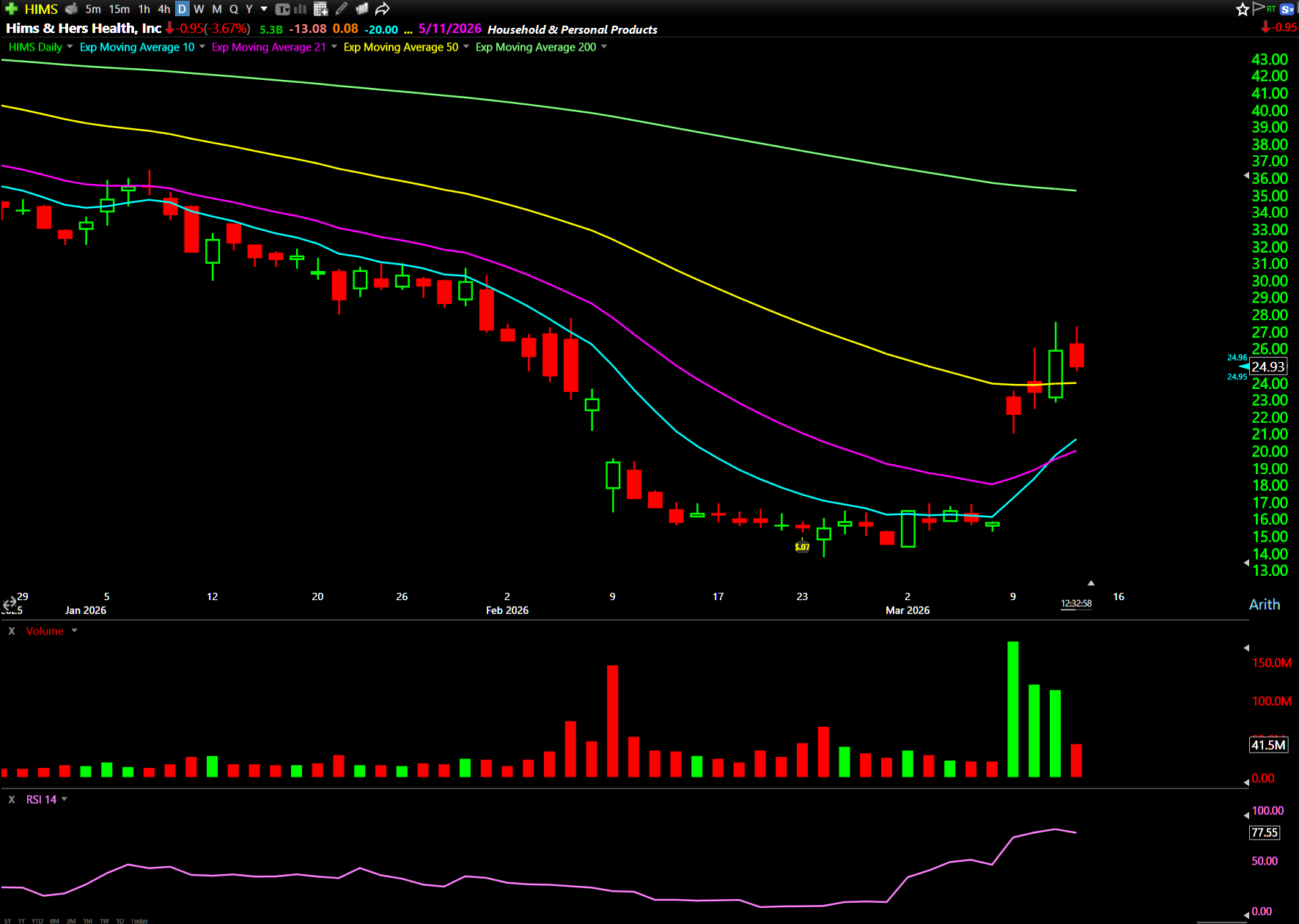
The trade worked. But a little more patience would have led to bigger gains.
Oracle Corporation (NYSE: ORCL). Large contracts came in for the April $200 calls. I entered too early and should have waited for support around $159. If it holds that level, we could se a move back to $170.
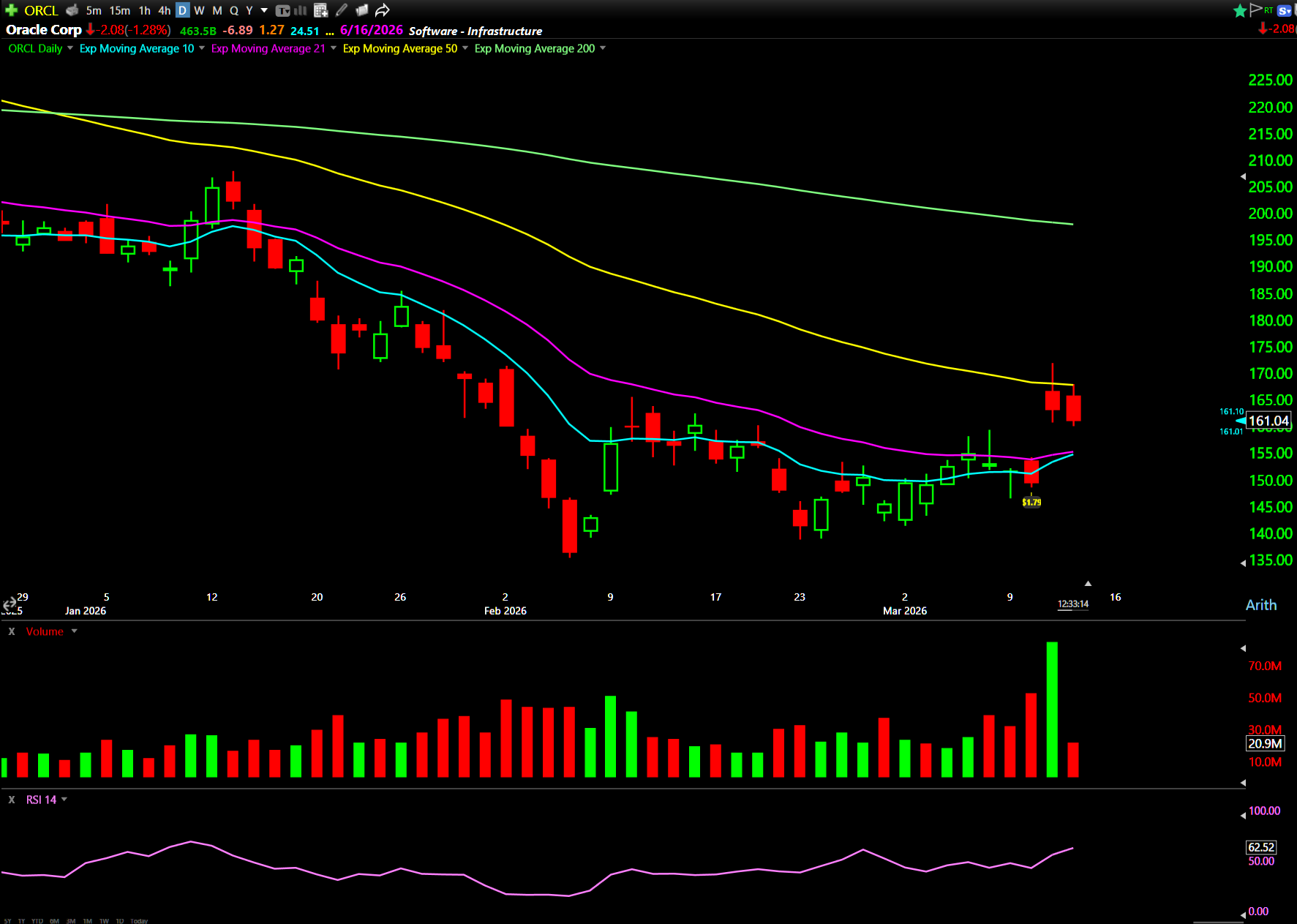
Same mistake. I didn’t wait.
How I’m Solving My “Patience Problem”
In a choppy market, you can’t expect follow-through. 80% of stocks move with the major indexes. If the market is chopping, most stocks will chop too. They’ll hit resistance and reverse.
That’s why we never trade out of need. When you feel like you have to make money, you start forcing trades that aren’t there.
See green, take green. Stay small and nimble.
Don’t chase momentum, wait for exhaustion.
One of the most reliable ways to measure exhaustion is with the average true range (ATR).
When a move exceeds 4 ATR, it’s approaching exhaustion.
Invesco QQQ Trust (NASDAQ: QQQ) moved from around $608 to $612 while the five-minute ATR was above 4. When that happens near resistance, you wait for the reversal instead of chasing strength.
Netflix, Inc. (NASDAQ: NFLX) ran to $100, which was both a psychological level and a four-ATR exhaustion point. I bought puts there and took about a 20% gain.* That’s patience, waiting for the move to exhaust itself.
Chevron Corporation (NYSE: CVX) showed the same pattern. Repeated 4-ATR exhaustion moves followed by reversals.
That’s why I’m building an indicator that combines ATR exhaustion, market internals, and trend phases.
(It’s coming soon…)
In a volatile market, saying you get to trade it means you get to learn patience. We get to do this. Not everyone gets this opportunity.
When we treat it like an opportunity, we trade responsibly.
When we treat it like a chore, we rush and make mistakes.
Remember: learning to trade this market is a privilege.
Be good (and be good to others),
Ben Sturgill
*Past performance does not indicate future results