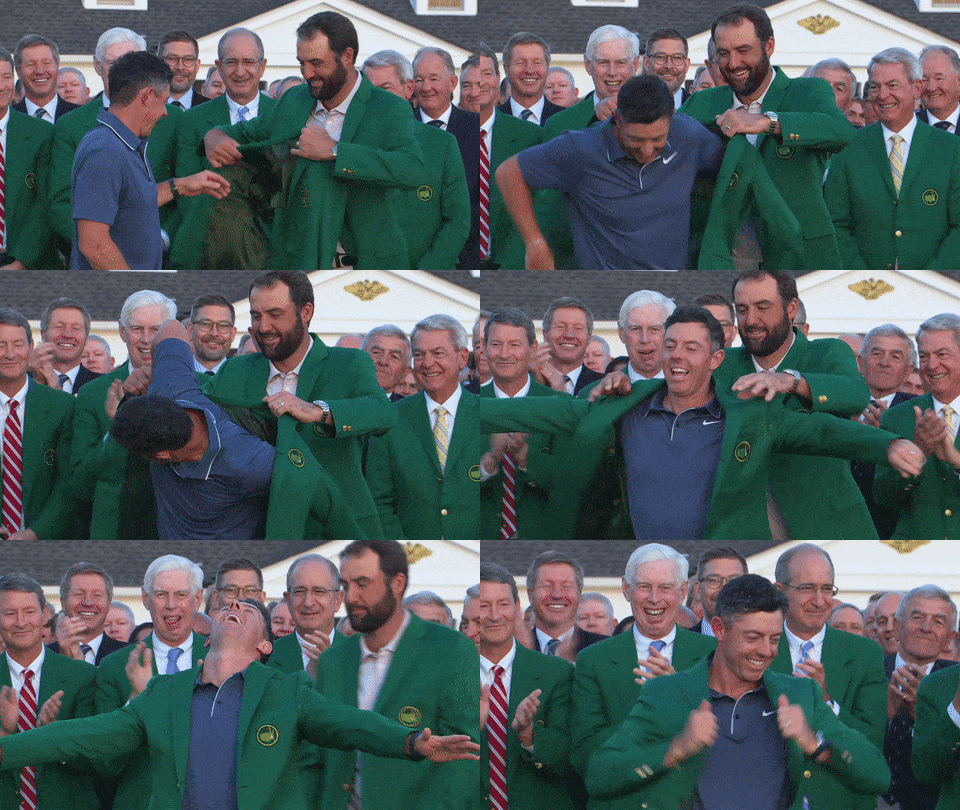
Rory McIlroy just won the Masters (the most prestigious golf tournament in the world) for the second year in a row.
Winning it once is a career achievement. Winning it back-to-back puts you on the Mount Rushmore of golf.
Let’s rewind to the final round of the 2025 Masters. McIlroy entered with a two-shot lead. He was one win away from completing the career Grand Slam (winning all four major championships, golf’s ultimate achievement).
He double-bogeyed the first hole. Another double bogey on the second, evaporating his lead before he reached the third tee.
A less experienced golfer might go back to the drawing board and completely revamp their strategy in a desperate attempt to fix a few small mistakes.
But not McIlroy. He didn’t change a thing. He used the same game plan and the same process that put him in the position to compete for a Grand Slam in the first place…
He went on to birdie the next two holes, fought all the way back through the rest of the tournament, and eventually won the whole thing in a playoff.
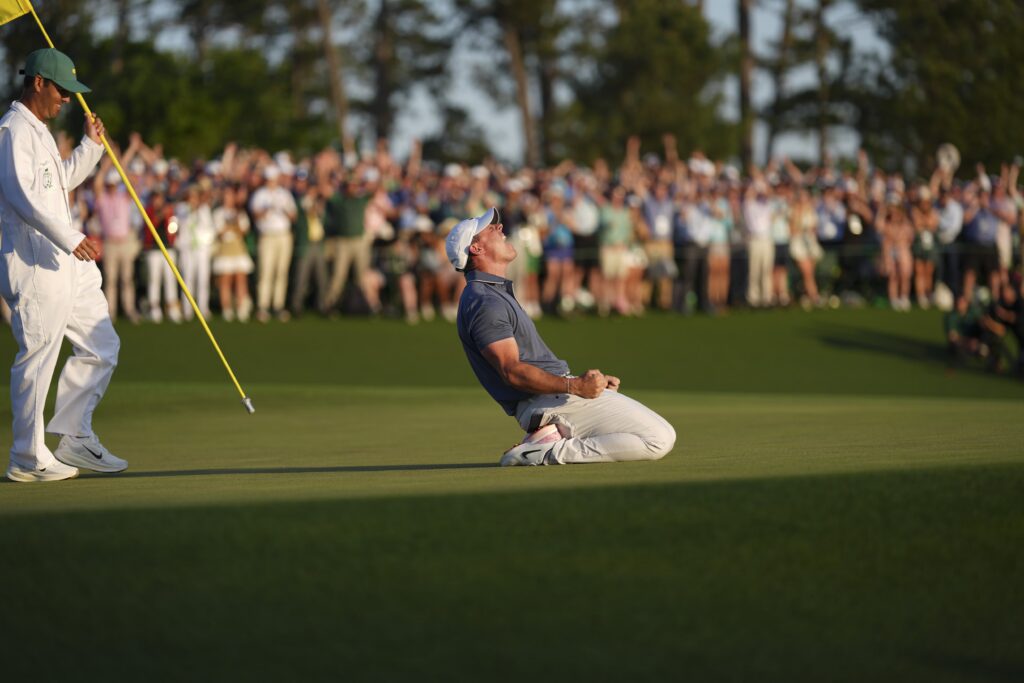
McIlroy understood those double bogeys for what they were: bad breaks, not proof his game plan was broken. That clarity and confidence led him to win the tournament this weekend.
Why am I talking about golf?
Because great traders and great athletes have more in common than you think…
The Episodic Pivot Trade
And as I was watching the Masters this week, I was simultaneously texting with my friend, a fellow options trader, during a particularly difficult setup.
And the entire time, I couldn’t help but draw comparisons.
Had my friend harnessed the same confidence Rory did, he might’ve saved his recent trade…
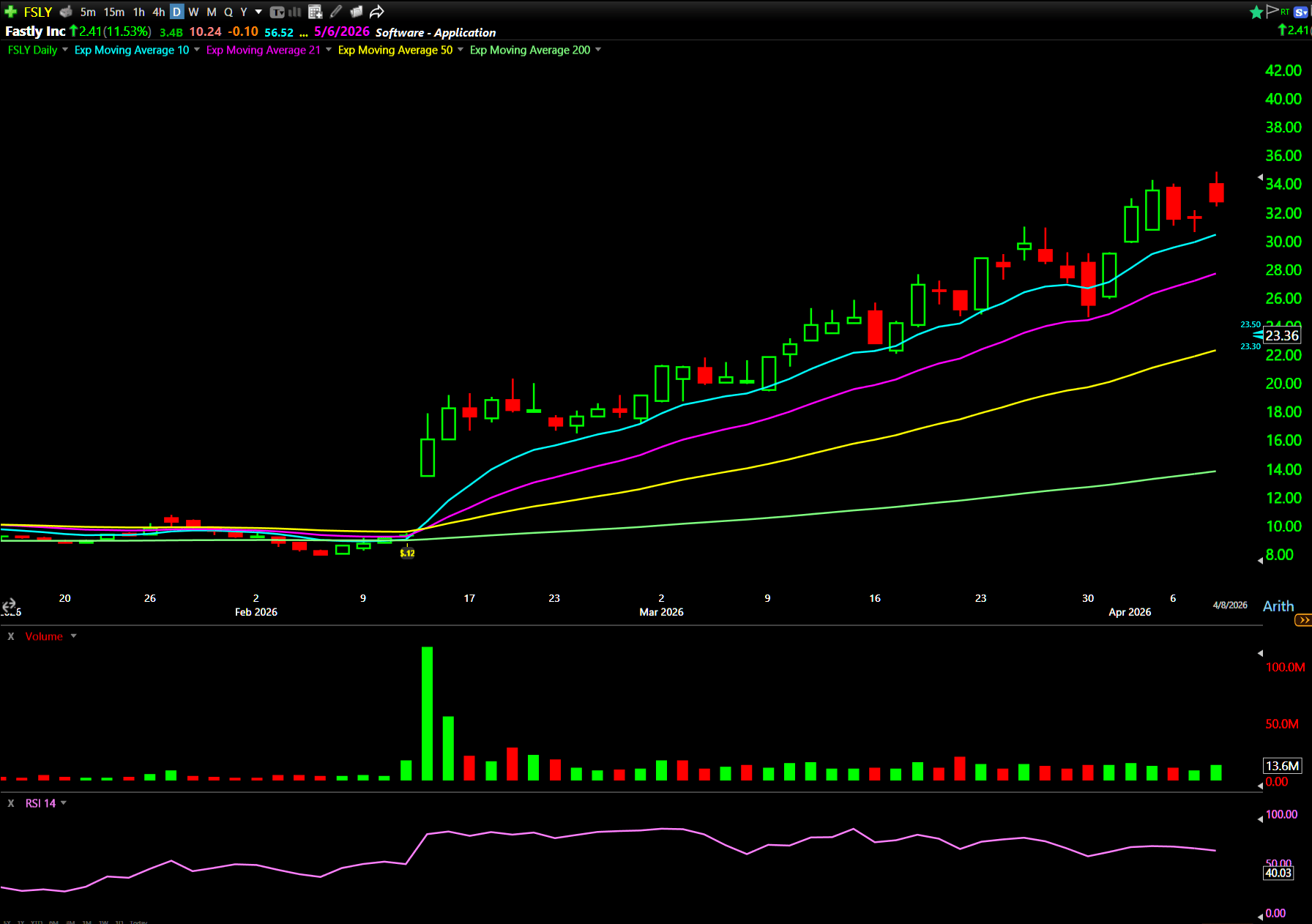
The stock in question: Fastly Inc. (NYSE: FSLY). After a 50%+ overnight post-earnings move on February 12, FSLY entered a face-ripping uptrend. At the end of last week, it was up 158% from the February lows.
When a stock:
- Gaps up on a big catalyst (earnings, news, product announcements).
- Continues moving higher by surfing the EMAs on the daily chart.
- Has no major pullback below the averages.
That’s a pattern called an Episodic Pivot.
Netflix Inc. (NASDAQ: NFLX) showed the same pattern just a few weeks ago. NFLX gapped 14% overnight on February 26th and ran higher for six straight sessions.
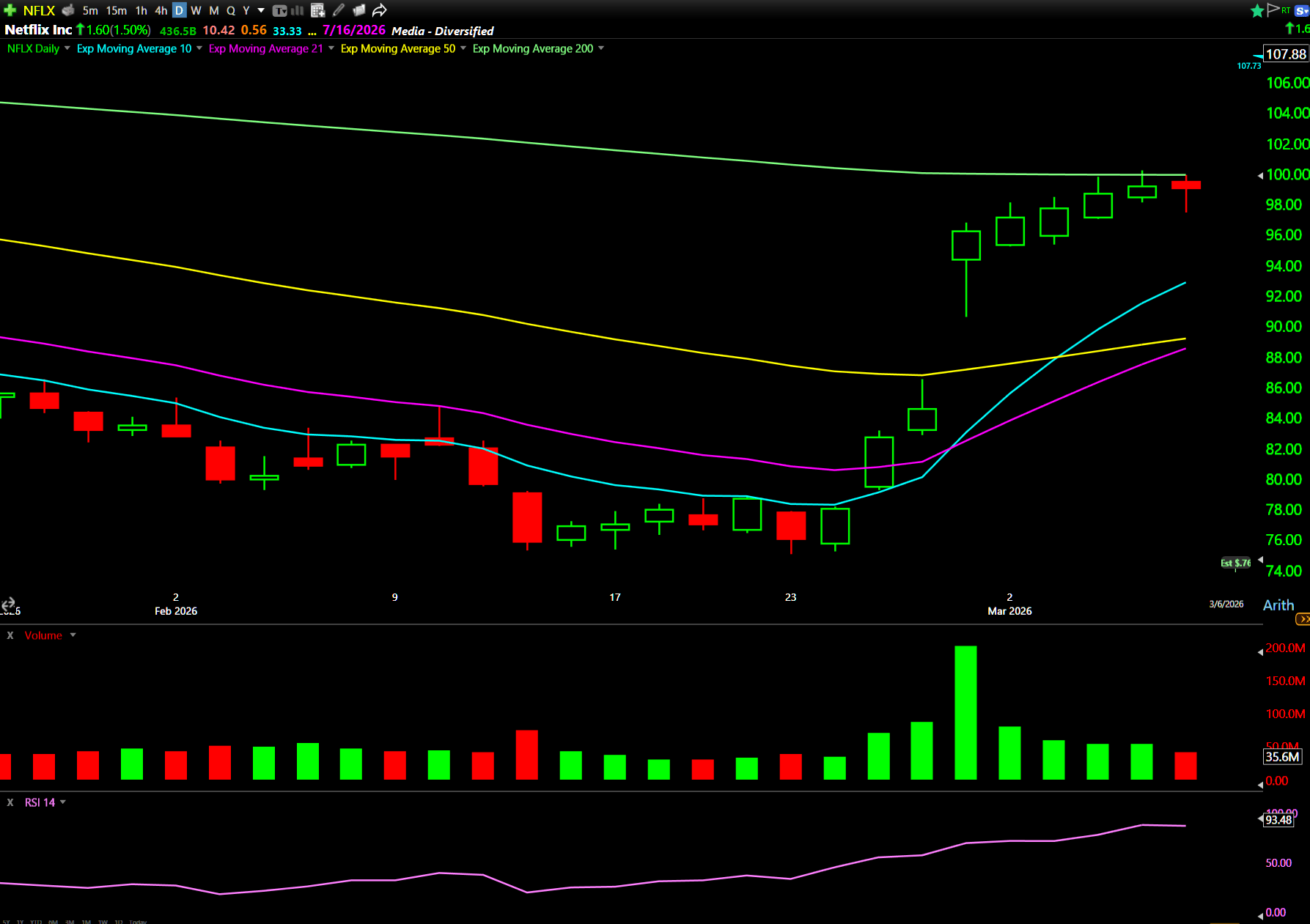
This pattern works well for mid-to-long-term swing trades. If the pattern holds and the uptrend stays closing above the EMAs, you don’t sell. Period. You hold the calls. You make sure there’s enough time on your contracts to realize a serious move.
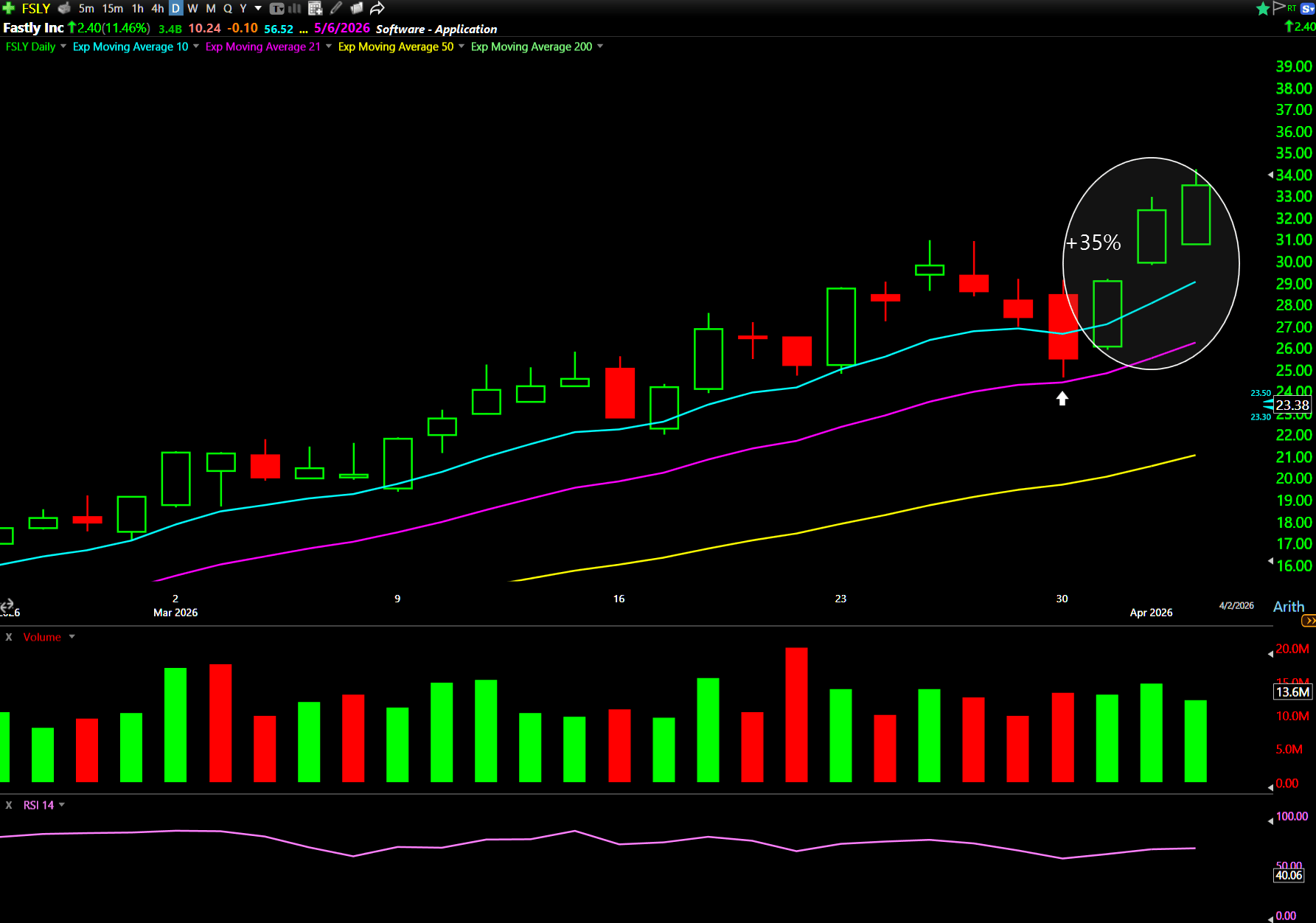
But if the stock is absolutely ripping, where do you get in? Wait for a pullback to the 21-day exponential moving average. If it holds that line, you’re good. If it fails, you pass.
My friend had just watched this exact indicator hold as support. On March 30th, FSLY pulled back 15% to that exact level and reversed immediately, ripping 35% in three days.
Then on April 9th, FSLY tested the 21-day EMA intraday, broke briefly below it, and reversed hard into the close. A clean pullback with perfectly defined risk (and 25% upside to the all-time highs).
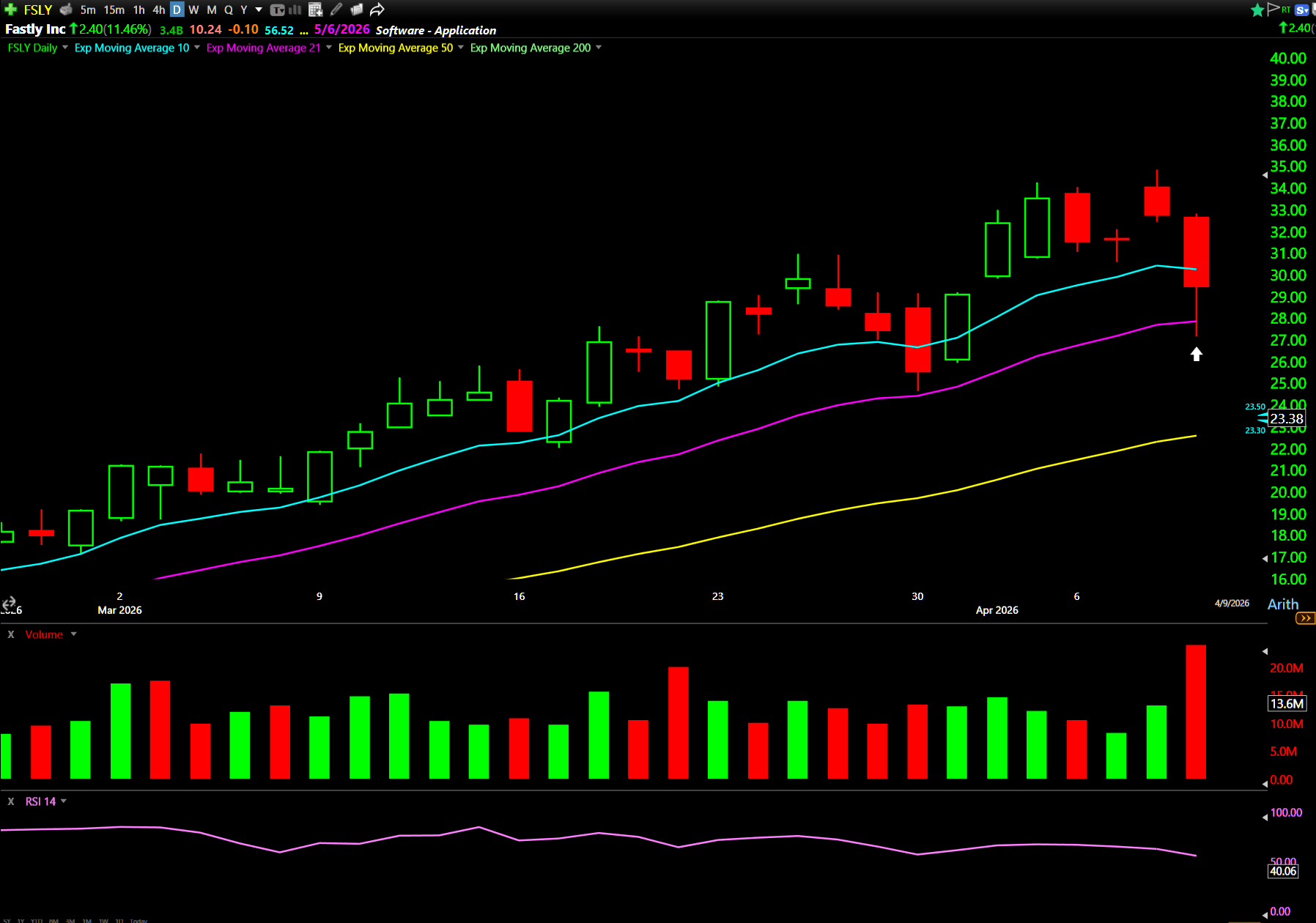
He followed every rule and checked every box.
But it didn’t work.
Why The Trade Didn’t Work
The next morning, nearly every edge AI infrastructure stock was red.
FSLY got absolutely obliterated in the carnage, slicing right through the 21-day EMA (and ruining my friend’s trade in the process).
My friend’s contracts were down 50%.
He called me, frustrated…
I told him: “Cover up that last candle and tell me what you see.”
In hindsight, nothing about that entry was wrong. It was still a textbook setup. The trade was simply a victim of market dynamics (completely out of his control).
That happens, and it always can. That’s part of the game. You can do everything right and still lose money.
After a loss that annoying, you might feel tempted to blame yourself, rewrite your rules, question your decision-making, throw your computer out of the window, etc.
But rewriting your process, just because one trade didn’t go your way, is exactly how you compound your losses.
That’s the real risk: letting the result poison your mindset.
McIlroy won back-to-back Masters by knowing which mistakes were his fault and which ones weren’t.
That’s what understanding, examining, and improving upon your losses can do for your trading
Step up to the next tee. Play the next play.
Be good (and be good to others),
Ben Sturgill
*Past performance does not indicate future results