

Good morning, traders…
I never went to business school. I was a history major.
And while it may seem unrelated, that degree has served me invaluably as a trader.
Markets don’t operate in a vacuum. Global headlines move asset prices as much as (if not more than) any other factor.
If you understand the historical patterns around the current headlines, you can better understand where the market might be headed.
(And know exactly how to trade it.)
You’ve heard by now: The United States and Israel bombed Iran over the weekend.
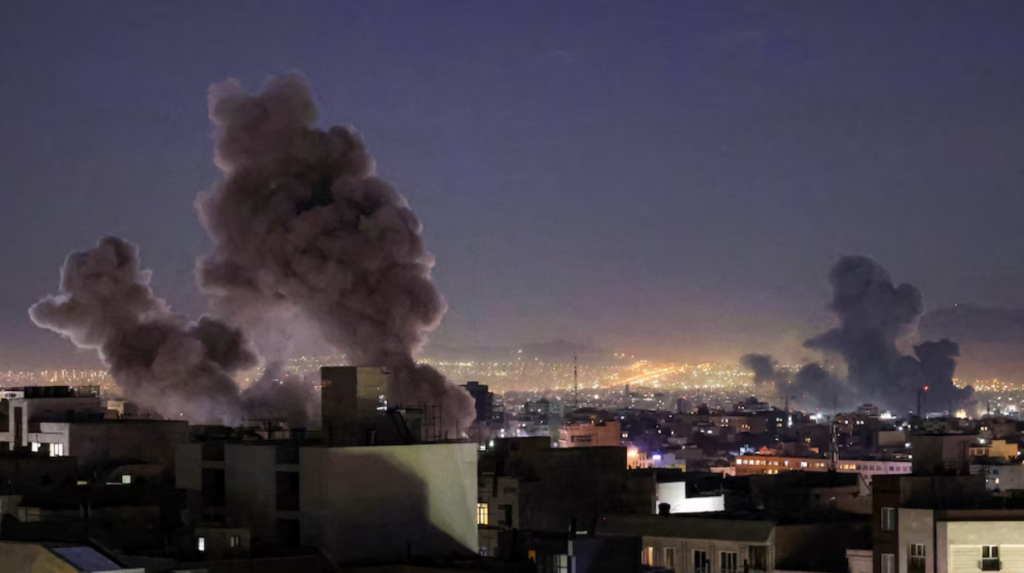
Iranian Supreme Leader Ayatollah Ali Khamenei was killed, while Iran responded with over 700 missiles and drones targeting Israel, U.S. bases, and sites across the Middle East.
War is tragic. I pray for any innocent people affected by these strikes.
But as traders, we have a job to do.
We trade the market we have, not the market we want.
Iran is the seventh-largest oil producer in the world. The country controls the Strait of Hormuz, where roughly 20% of global oil supply passes through daily.
When military strikes target the Middle East, oil prices move higher.
They always have.
Iraq in 2003. Afghanistan in 2001. Desert Storm in 1991. Syria. Libya. The list goes on.
Each conflict created volatility. Each one moved energy markets. And each one followed a predictable pattern.
The question traders are asking right now: How high does oil go this time?
To answer that, you need to understand what happened during previous Middle East conflicts.
You need to see how oil prices responded to similar uncertainty.
You need to know your history…
Desert Storm (1991)
In 1990, Iraq invaded Kuwait. Both countries produced significant oil. Traders immediately worried about supply disruptions.
July 1990: $17-21 per barrel
Peak (mid-October 1990): $46 per barrel
Increase: 120-170%
Once the U.S. and allies intervened and Kuwait was liberated, oil prices reverted. Uncertainty eased. Supply concerns faded. Prices normalized.
But major trading gains were made in the process.
Afghanistan (2001)
After September 11, 2001, the U.S. went to war in Afghanistan. Afghanistan produced minimal oil, but the war still moved oil prices higher.
Traders weren’t worried about Afghanistan’s oil. They were worried about regional stability.
What if the war spreads to neighboring oil producers? What if supply chains get disrupted? What if pipelines or shipping routes become targets?
Uncertainty drives prices up. When traders don’t know what comes next, they prepare for the worst.
Again, oil prices spiked on those fears.
Iraq (2003)
In 2003, the U.S. and allies invaded Iraq. Iraq is one of the largest oil producers in the world and a major OPEC member. Any military action there directly threatens global oil supply.
Oil was trading around $25 per barrel before the invasion. It surged above $35 as the conflict unfolded. Even after initial operations concluded, prices stayed elevated because instability persisted for years.
December 2002: $25-27 per barrel
February 2003 (pre-invasion): $35-40 per barrel
Increase: 45-60% in the lead-up to the war
By now, it’s not even debatable…
Wars in oil-producing regions create highly tradable moves.
Iran (2026)
Iran is the seventh-largest oil producer in the world. The country controls critical shipping lanes through the Strait of Hormuz, where roughly 20% of global oil supply passes daily.
When U.S. and Israeli forces struck Iran on February 28, oil prices immediately spiked.
Traders are pricing in multiple risks:
- Direct supply disruption from Iranian production facilities being targeted
- Iranian retaliation against regional oil infrastructure (which has already begun)
- Potential closure or disruption of the Strait of Hormuz
- Broader regional instability affecting Saudi Arabia, UAE, Kuwait, and other producers
Iran has already launched strikes across nine countries: Bahrain, Iraq, Jordan, Kuwait, Oman, Qatar, Saudi Arabia, UAE, and Israel.
U.S. military bases have been hit. And oil facilities in neighboring countries are potential next targets.
This is exactly the kind of uncertainty that drives oil prices higher.
Traders don’t know how far this escalates. They don’t know if the supply gets cut.
So what do they do?
You got it: They buy oil futures and energy stocks.
It’s Simple Supply and Demand
The market is pricing in worst-case scenarios:
Will Iranian production facilities get taken offline? Will shipping routes through the Strait of Hormuz close entirely? For how long? Will regional producers reduce output due to security concerns?
Nobody knows. But my colleague Becca is already positioning for the volatility…

My Trading Plan
Oil has always moved higher during Middle East conflicts. That pattern is playing out again.
Options on oil stocks, ETFs, and the commodity itself could all be potential short swing opportunities.
But don’t chase into strength. Wait for a pullback.
This is a high-probability setup that shouldn’t be ignored.
That said, I’ll never root for conflict to create trading opportunities.
But I will trade the reality in front of me.
Oil prices are moving. Energy stocks are responding. And the historical pattern suggests this continues as long as uncertainty persists.
That’s the market we have.
Trade it.
Be good (and be good to others),
Ben Sturgill
*Past performance does not indicate future results