Let’s be honest. This market feels bad, but…
If you told me six months ago that the U.S. would be at war with Iran, unemployment would hit 4%+, and the Fed’s benchmark rate would still be at 3.75% … I would’ve predicted a 15-20% drop in the S&P 500.
I would’ve been wrong.

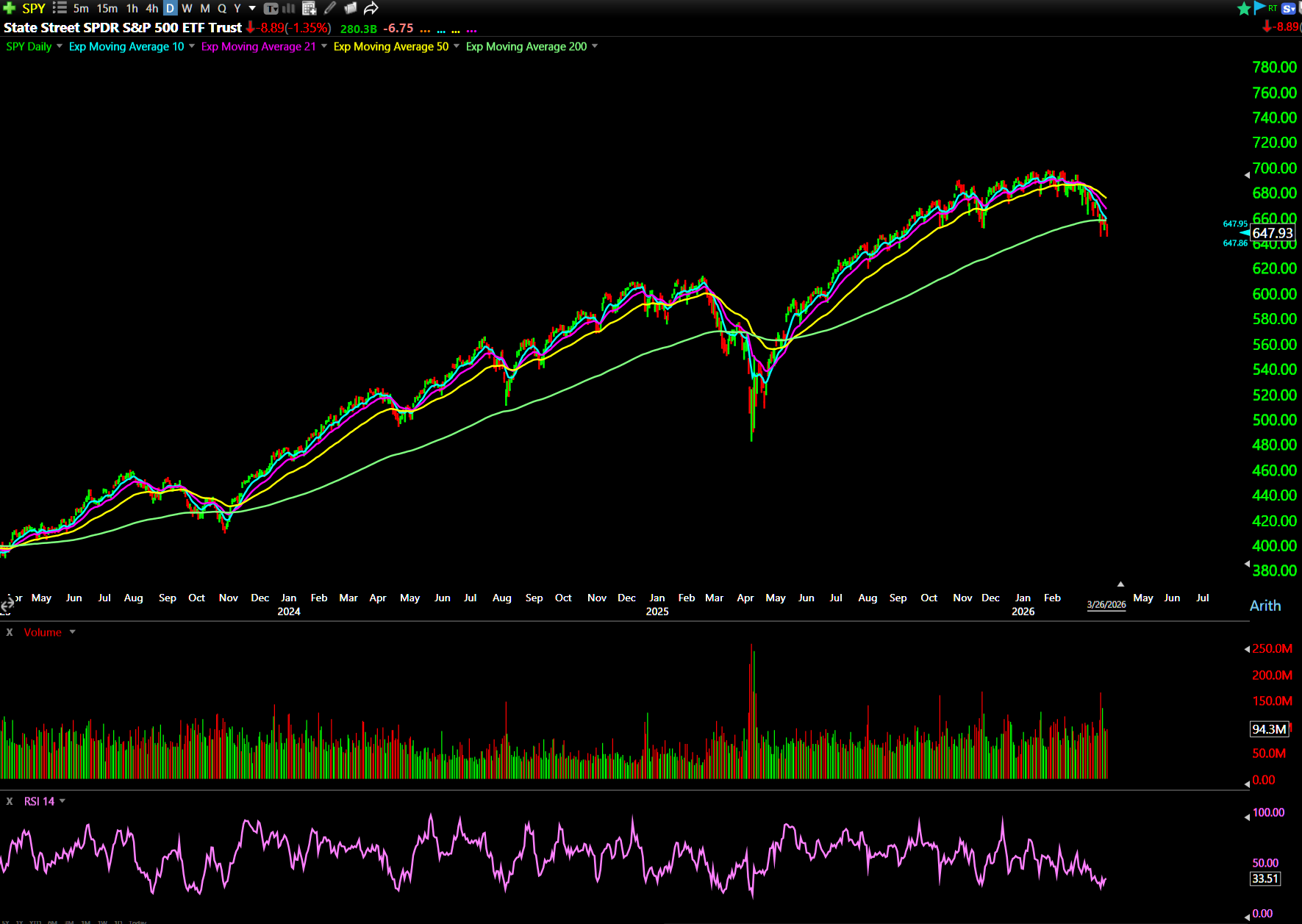
The State Street SPDR S&P 500 ETF Trust (NYSEARCA: SPY) is just 6% off its highs. We’re still near historically high stock prices while the real economy is clearly weakening.
And that disconnect tells you something crucial about how markets work.
When people talk about “the economy,” they mean real-world activity you can measure today:
- Jobs
- Wages
- Consumer spending
- Housing sales
- Small business revenue
The stock market prices in what traders think will happen next year:
- Earnings growth in 2027
- Rate cuts coming in six months
- AI productivity gains two years out
These are two completely different measurements … on two completely different timeframes.
That gap has always existed.
But in 2026, it’s wider than I’ve seen in my 22-year trading career.
Understanding this gap will give you priceless clues about where the market might be headed next…
Plus, it’ll stop your account from getting whipsawed by economic headlines and start moving you towards where the best trading opportunities are hiding right now…
The Truth About The Market
SPY came into 2026 trading around $690. It’s pulled back to the mid-$640s. That’s not a crash by any measure.
Market leadership is extremely narrow. 7 stocks make up nearly 40% of the index. Peel back one layer, and small caps are getting crushed (while most other sectors are flat or declining).
That’s not exactly broad-based strength. (But remember, we didn’t need broad-based strength for the SPY to absolutely rip in 2020, 2021, 2023, 2024, and 2025.)
All of the current moves tie directly to macro events. Fed policy shifts. Iran conflict developments and oil spikes. AI infrastructure announcements. Individual company fundamentals matter less than they should.
The Truth About The Real Economy
Growth is slowing, but it hasn’t fully broken yet.
Consumers are still spending, but they’re stretched thin. Credit card balances keep climbing, and delinquency rates are rising.
Plus, the labor market is softening. Headline unemployment at 4.4% isn’t catastrophic, but hiring has slowed noticeably. Tech layoffs and white-collar cuts are getting bigger by the day.
Interest rates at 3.75% are biting harder now. Housing activity is sluggish, and small businesses can’t afford financing costs. Day 10 of the Iran conflict pushed oil to $120 per barrel, elevating gas prices nationwide. The economy feels tight (even though we’re not officially in recession).
Why They’re Disconnected
The market discounts what comes next.
Stocks are pricing rate cuts arriving in the second half of 2026. Namely, an AI productivity revolution that transforms business operations.
Liquidity props everything up. Despite elevated rates, massive capital keeps flowing through the system. The government shutdown hampers it slightly, but the market has been super resilient because of constant inflows. 401 (k) funds automatically buy stocks at every pay period. Mega-cap tech names absorb billions in passive flows. AI infrastructure plays soak up institutional money.
That creates a floor under prices, even when economic fundamentals sag.
The S&P 500 doesn’t represent Main Street America. These are global corporations running asset-light business models with high profit margins and heavy tech exposure.
Small regional businesses operating with physical assets and thin margins exist in a completely different economic reality.
The 2 Forces Pulling The Market Apart
What’s holding prices up?
$500 billion committed to AI infrastructure spending. Potential Fed easing starting mid-year. Rock-solid balance sheets at the top 10 companies by market cap.
What’s dragging prices down?
GDP growth is clearly decelerating, inflation is stickier than the Fed wants, geopolitical instability is pushing energy and defense costs higher, and market breadth is so narrow that one crack could break the whole tower of toothpicks.
As a result, we get chop instead of trends. Fakeouts instead of breakouts. Pullbacks that go too deep. Sloppy price action in place of clean moves.
But we also get some trading opportunities that simply do not show up during calm bull markets.
How This Affects My Trading Approach
- I’m focusing on names with relative strength in a weak market, as well as some beaten-down names hitting solid support. (See my watchlist from yesterday).
- I’m shortening my holding times. This environment doesn’t reward patience the way trending markets do. Get in, take your gains, get out.
- I’m trading smaller position sizes. When the market gets this choppy, risk management matters more than being right.
- I’m expanding my horizons to the short side. Put-buying opportunities are showing up more frequently. I’ve spent 22 years primarily trading calls, but markets like this one inspire me to look in both directions.
Your trading needs to match the moment…
That’s why I’m hosting a LIVE 2-day Bootcamp March 31st – April 1st at 12:30 PM EST.
I’ll walk you through the low-stress options system I’ve used for over 20 years. The same system that’s allowed me to live free from financial stress in Florida with my wife and three kids.
It’s not sexy. It won’t make you rich overnight. And that’s the point.
But it will help you build a personalized trade plan that fits your life and helps you, so you can quit stressing and get back to living.
We don’t live to trade. We trade to live.
WARNING: NO DEGENS ALLOWED
See you there,
Ben Sturgill
*Past performance does not indicate future results