
We all make mistakes in trading. I make them, you make them.
How will you respond?
Mistakes can go one of two ways:
- They can break you mentally, turn into shame, and destroy your execution.
- They can teach you something, force you to adjust, and make you a better trader.
The result comes down to ownership. If you dwell on mistakes and internalize blame, you spiral. If you own them and learn from them, you’ll improve immediately.
Let me show you how to handle mistakes the right way. How to own them without beating yourself up. How to adjust your execution so the same mistake doesn’t happen twice.
And most importantly, how to move on.
Because if you can’t move on from mistakes, you’ll keep making them over and over again.
And knowing 90% of traders lose money…
How do you separate yourself from the crowd?
By avoiding the errors everyone else is making…
How Mistakes Can Break You Mentally
Do you dwell on your mistakes? Join the club. I used to be the worst at this.
Mistakes can make or break you mentally:
- When we dwell on them.
- When we beat ourselves up over them.
- When we internalize the responsibility and the blame.
Responsibility is important. But blame is dangerous.
This is the concept of extreme ownership as coined by Jocko Willink and Leif Babin.
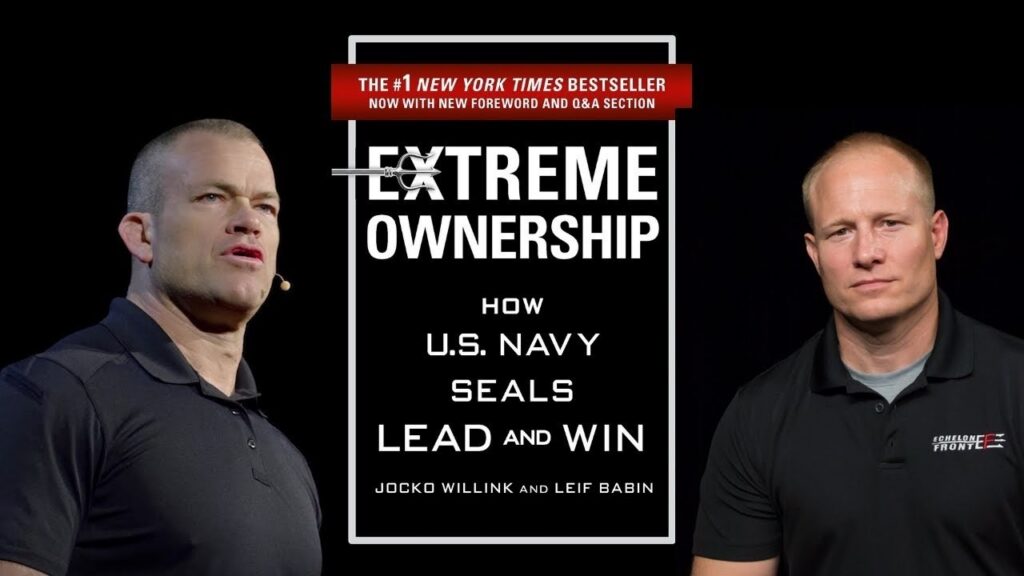
The concept is simply: don’t be a victim, ever. Whether a mistake is your fault or not, own it.
How can you own that reality? How can you take responsibility?
This is incredibly important in your trading. If you can own your errors, you can move past them. And if you can use them to improve, they actually become net positives.
Have you ever had that negative self-talk of, “Man, I always do that. I always screw this up?”
Or even worse: “The market hates me. The odds are stacked against me. That ticker always takes my money.”
That line of thinking is a dangerous trap…
Instead of blaming external factors, you need to own it. If you own it, you don’t blame the market. You don’t shame yourself.
You look at your process and ask: “How should I respond to this?”
If you dwell on your mistakes, you reinforce negativity.
If you internalize blame, that turns into shame.
Then, instead of looking at the setup externally and objectively, you turn inward and view it subjectively.
That’s SO dangerous (and mentally unhealthy).
But when you own it, you can ask yourself:
- What must I do to learn from it?
- How can I correct it?
- How can I account for it?
- How can I learn about myself or my setup?
- How can I change myself or my setup?
- How can I put rules in place to counter it?
Risk management demands responsibility. We must define the risk, own the risk, and take responsibility for our account and our chips.
That’s how we live to trade another day.
How Mistakes Can Break Your Execution
You need to know what your tendencies are. You need to know what your common mistakes are.
Then you can make your trade plan account for them.
If you tend to hold on too long, how do you account for that? Put in a hard stop.
Could you get wicked out and have it go the other way? Yes. But you’re being disciplined.
If you tend to exit too early, use an alert instead of an automatic stop. If your stops are usually too tight, widen them. Or change the way you scale out.
How do you track your weak points? Journaling, writing it down, and reviewing your moves at the end of every day.
I won’t sugarcoat this: stepping into the pain is hard. It’s frustrating.
Tell somebody else. Don’t do this alone. Don’t try to hide from it. Have a trading partner. Talk to them.
That’s how I view my students. You’re my therapy. This is me owning it, not hiding from it, not being ashamed of it, but saying, “Okay, I make mistakes. How can I learn from them? How can I change? How can I account for them? How can these lessons improve my execution?”
We’re all on a journey here to become the traders we want to be.
You learn that from the things that work (and the things that don’t).
It comes down to reviewing, understanding the mistakes, owning them, adjusting, and getting better every day.
How To Move On
The final mindset point: you need to move on.
You’re human. You might have a hard time moving on. If a trade worked for you, you treat it like your golden goose. You come back to it because it paid you once, so you think it’ll pay you again. You might give too much back doing that.
Or you stay in trades too long because you don’t want to be wrong. You don’t want to lose money. You don’t want to admit defeat. You want to be faithful to the trade.
Either way, it’s time to move on.
One practical way to do that: take the ticker (or contract) off your watchlist. It’s dead to you.
It’s like leaving your ex’s belongings at your house. Tell them to take back the toothbrush, the shirt, whatever it is. You don’t need to keep looking at it. You need to move on.
If that’s a common struggle of yours, look into it. Understand your “why.” Why do you stay too long? What’s going on inside you that causes that?
Think about it. If you’re making a mistake, others are making it too. And if most people in the market lose money, how do you become different?
Recognize your mistakes. Then you can fix them, for good.
Be good (and be good to others),
Ben Sturgill
*Past performance does not indicate future results