

Good morning, traders…
Honey badgers are small but aggressive mammals native to Africa, the Middle East, and parts of India.

Despite weighing only 20–35 pounds, they have a fearlessness and durability that far exceed their size.
Honey badgers get attacked, but they don’t care.
They take the hit, shake it off, and keep doing their thing…
That’s exactly how certain stocks behave when bad news hits.
While weaker names crater on negative headlines, resilient stocks absorb the selling pressure and reclaim their levels within hours.
I call them Honey Badger Setups, based on one simple concept:
If a stock holds up on bad news, imagine what it can do on good news.
Let’s break down 2 textbook Honey Badger Setups (that haven’t taken off yet)…
What Makes A Honey Badger Setup?
A resilient stock gets bad news but doesn’t sell off. Or it sells off briefly and snaps back immediately.
Just like a honey badger.
This usually means one of three things:
- The news is overblown.
- The narrative is exaggerated (possibly so Smart Money players can accumulate shares at lower prices).
- The demand is so insatiable that buyers absorb selling pressure anyway.
Either way, identifying resilience lets you trade names with proven strength.
Including two recent ones…
NVDA: The Textbook Honey Badger
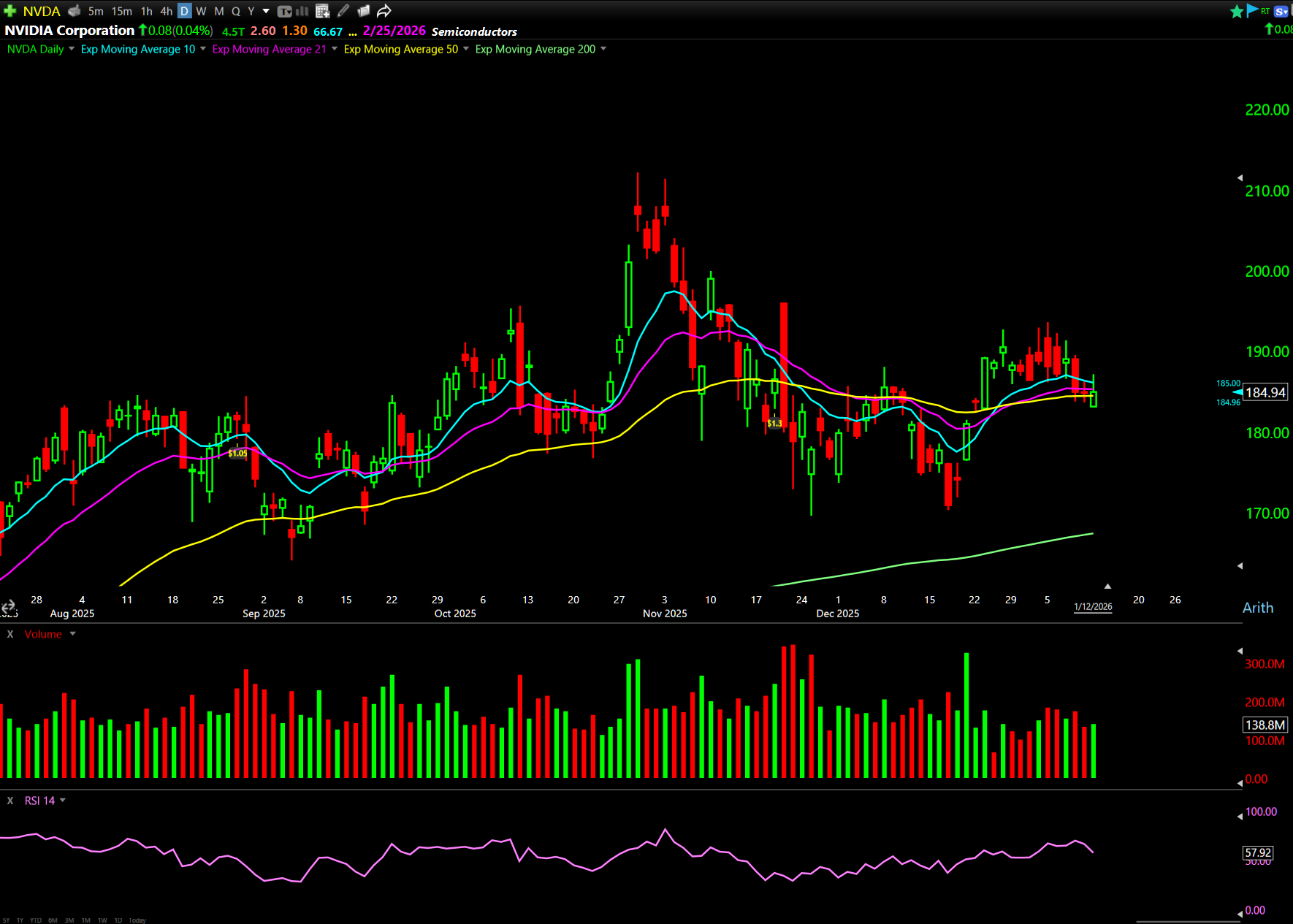
Nvidia is currently giving us a textbook Honey Badger setup.
Last week, a headline hit saying China wouldn’t be buying more Nvidia chips.
NVDA pulled back to the 5-minute 50 SMA…
…and then snapped right back up.
Buyers were waiting at that level, ready to absorb the selling pressure and push the price higher.
The stock completely shook off the bad news. That’s resilience proving itself in real time.
Once I saw that bounce, I was looking for VWAP pullbacks (high-probability entry levels).
The stock already proved it has support. Buyers already showed their hand.
I was comfortable buying those pullbacks because of the resilience, which told me demand was strong enough to hold.
I made 300% trading Nvidia calls in October. Let’s do it again…*
XLF: A Honey Badger in Development
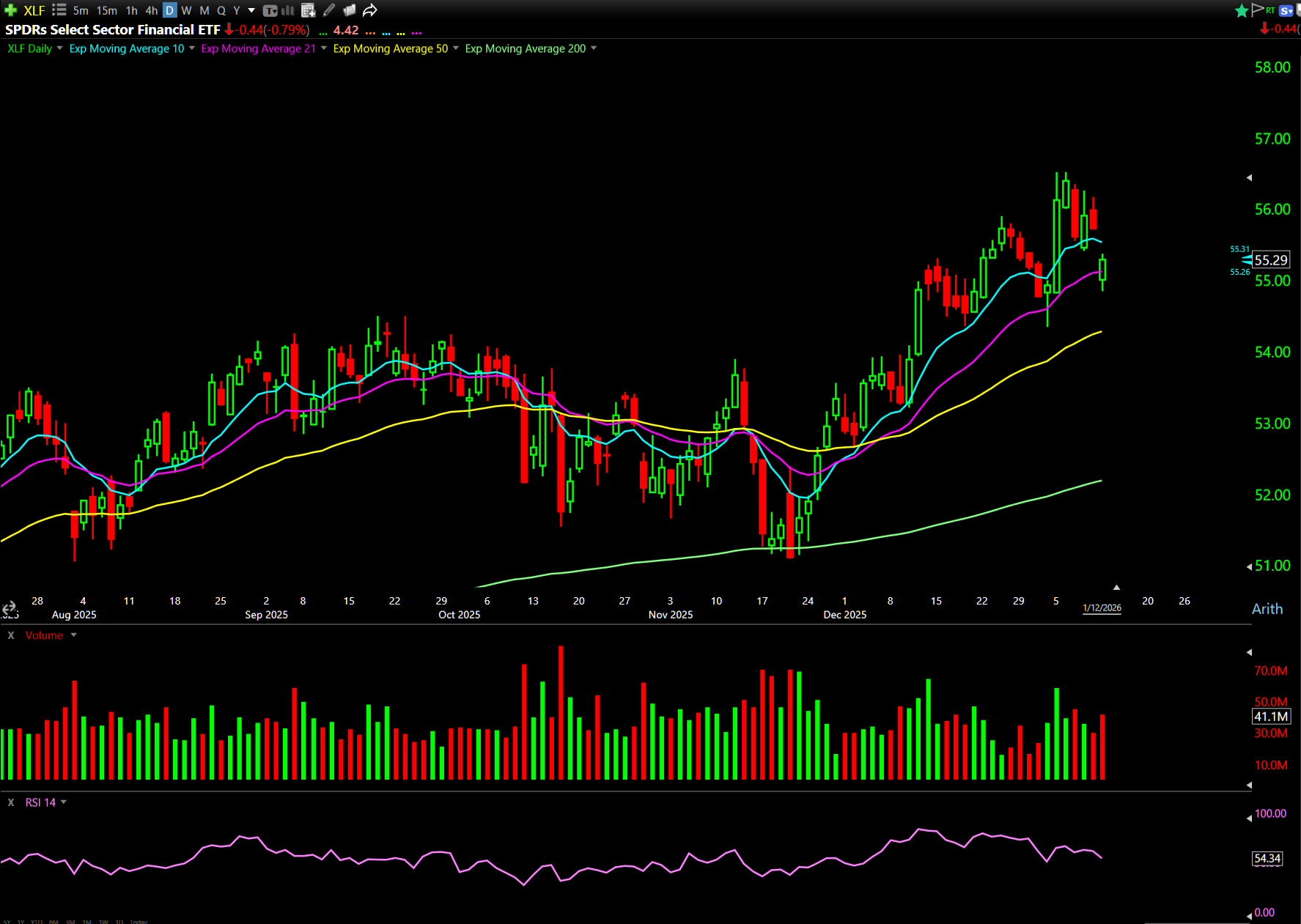
XLF is showing a similar pattern on a longer timeframe.
A strong sector ETF that’s been grinding higher for weeks, XLF is now pulling back into a defined risk zone (around $55).
That’s where the 8 EMA and 21 EMA converge. It’s also near a prior resistance level that became support after the breakout.
Most importantly, the Smart Money is flowing into XLF April 17 $59 calls.
Pullback into risk zone, tight stop just below key moving averages, target a bounce back toward the mid-$56 region.
If it holds $55, XLF is looking like another strong Honey Badger prospect.
How to Size Your Positions
When I trade resilient names or sector pullbacks, I use this systematic sizing approach:
- Start with a small position when the setup appears.
- Add more if the price moves into deeper risk zones (a better entry).
- Reserve full sizing for the best pullback.
This keeps you from going all-in at the wrong time. You scale in systematically as the setup develops.
NVDA showed resilience at the 5-minute 50 SMA:
- I started a small position there.
- When it held VWAP on the next pullback, I added more.
- I’ll consider adding on further pullbacks, using the same system.
XLF is pulling back into the 8 EMA / 21 EMA risk zone:
- I’ll start when it touches that level.
- I’ll add more if it dips slightly below and holds.
- I’ll enter with full size if it bounces off support with volume confirmation.
Why I Look For Honey Badger Trades
Resilient stocks have already proven their strength.
When bad news hits and the stock barely flinches, buyers are ready.
They’re absorbing supply and defending key levels.
Nvidia proved it was a Honey Badger last week. XLF can do the same this week.
- Find the resilience.
- Enter on the pullback.
- Define your risk.
- Scale your position size.
Happy trading,
Ben Sturgill
*Past performance does not indicate future results