Good morning, traders…
Let me say something that doesn’t get said enough: You don’t need to be the smartest trader in the room…
You just need to be the most prepared.
What throws most people off track isn’t the market itself — it’s their lack of structure.
They’re chasing alerts, guessing on entries, reacting instead of responding. And when something doesn’t work, they don’t know why.
Was the setup bad? Was the timing off? Was it just bad luck?
That’s what happens without a process.
Trading gets a lot simpler when you focus on doing the same things, the same way, every time.
Not because it guarantees the outcome, but because it gives you something to measure, repeat, and improve.
Every trade I take runs through the same 5-step process…
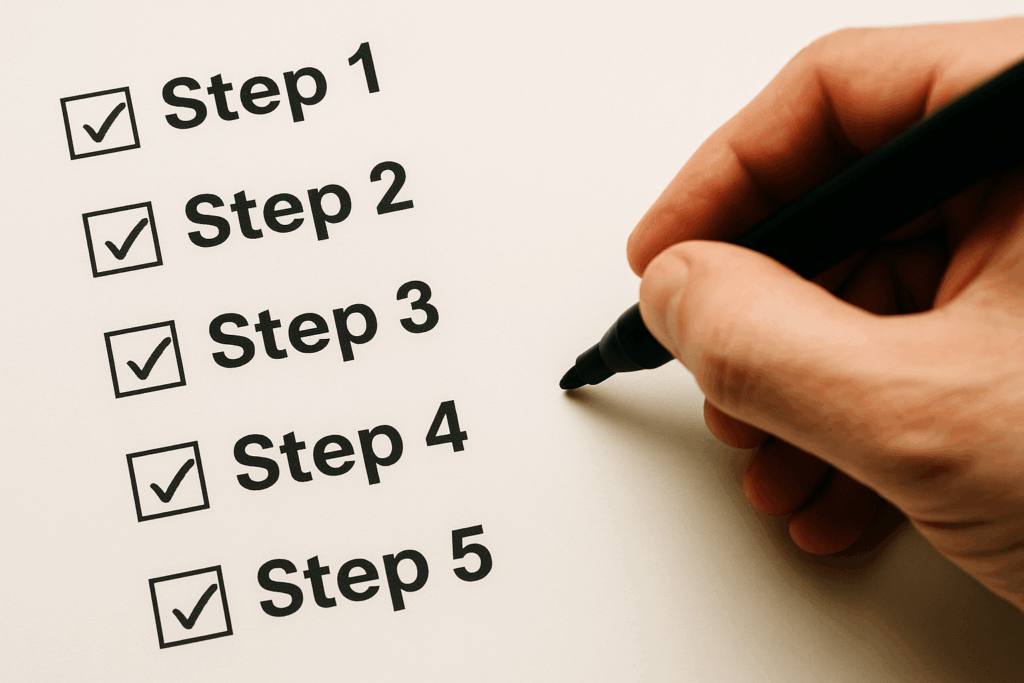
Whether the market is calm or chaotic, I don’t wing it. I don’t rely on instincts or gut feelings.
I follow the checklist that has proven itself time and time again.
Let Me Show You The 5-Step Process That Keeps Me Profitable…
Step 1: Find the Idea
Everything starts here. Before anything else, I’m looking for what to trade.
That means using my OMEN Scanner to check for unusual option activity—contracts that are showing signs of fresh volume and interest. I’m also looking for names with inexpensive contracts, ideally under 30 cents, so I can manage risk more effectively.
The tools I use are built for this. They highlight where big volume is hitting names that weren’t on the radar the day before. That doesn’t mean it’s time to jump in—but it does mean it’s worth a closer look.
If you’re not using the scanner, you’re already behind. Don’t trade what everyone’s watching. Trade what the Smart Money is trading.
Step 2: Confirm the Setup
Once something catches my eye, I don’t just trade it because it looks “interesting.” I move straight to the chart.
I’m looking for confirmation — something that tells me this isn’t just noise. That might be a clean technical setup, volume confirming the move, or a previous level of support or resistance that the price is reacting to.
The goal is to connect the scanner alert with something real on the chart.
No chart structure, no trade. Simple as that.
Step 3: Make the Plan
Before I take any trade, I need a plan. Not after I enter. Not while the position is moving.
Before.
That means three things are locked in:
- My entry: the price I’m waiting for
- My target: the level where I’ll take profits
- My stop: the point where I’ll exit if it doesn’t work
The biggest mistakes I see traders make happen right here. They skip the planning. They jump in based on emotions, then figure it out as they go. That’s a recipe for inconsistency.
You can’t manage what you didn’t define. The plan has to come first.
Step 4: Wait for the Trigger
This is the part no one wants to hear: most of trading is waiting.
You can do all the work up front — scan, chart, plan — and still need to sit on your hands. That’s not a sign of weakness. It’s a sign of discipline.
Patience is your best friend.
The trigger is what activates the plan. Price has to come to your level — not the other way around. You’re not chasing. You’re not reacting to noise…
You’re waiting for the setup to come to you.
The more patient you are here, the more control you keep. That’s how you reduce risk and avoid overtrading.
Step 5: Execute and Manage
Once the trade triggers, it’s all about execution and management.
If the price hits your level, you enter. If it hits your target, you take profits. If it hits your stop, you step out and move on.
No revenge trading. No hoping. No “maybe it’ll bounce.”
A lot of traders make their trades personal. They want to be right. They want to force a win.
But this is about following the plan you built. You already did the work. Now you just manage it.
- If it works? Great.
- If it doesn’t? No problem. You followed your rules. And that’s a win in and of itself.
The Power of Repetition
Just like learning to shoot free throws, repetition is everything in trading.
This process — find, confirm, plan, wait, execute — isn’t something you do once in a while. It’s something you do over and over. Every session. Every setup.
Eventually, it stops being something you have to think about. It becomes automatic, second nature. That’s when the guessing games start to fade into the background. It’s when you move from reacting to responding.
The more you follow this process, the less confusion you’ll deal with. You won’t need to chase trades. You won’t wonder what to do next. You’ll already know.
And speaking of knowing what to do next…
Want to learn how to execute trades like this?*
The best place to start is in our Smart Money Workshops.
You’re one click away from the best setups in the options market.
Join us TODAY at 12:00 p.m. EST.
*Past performance does not indicate future results