

The entry is where a trade is won or lost.
Chase it, and you’re underwater before the move even starts. Hesitate, and the stock leaves without you.
Without a proper strategy, the stress of this decision is enough to make a trader sweat through their shirt.

Five minutes too early or five minutes too late, and a winning setup turns into a losing trade. That kind of pressure weighs on a person.
But with this trading strategy… my pits are dry.
I sent two stocks to my students yesterday with this exact pattern.
- Microsoft Corporation (NASDAQ: MSFT)
- Applied Digital Corp. (NASDAQ: APLD)
Both stocks qualified for a potential trade, and both had the price action that I look for.
One paid out. The other never gave us an entry.
That’s the part nobody talks about.
Sometimes the pattern doesn’t trigger.
And learning to walk away from a stock that doesn’t trigger is just as valuable as catching the one that does.
The Setup I Sent To Students
Here was my alert from May 6:
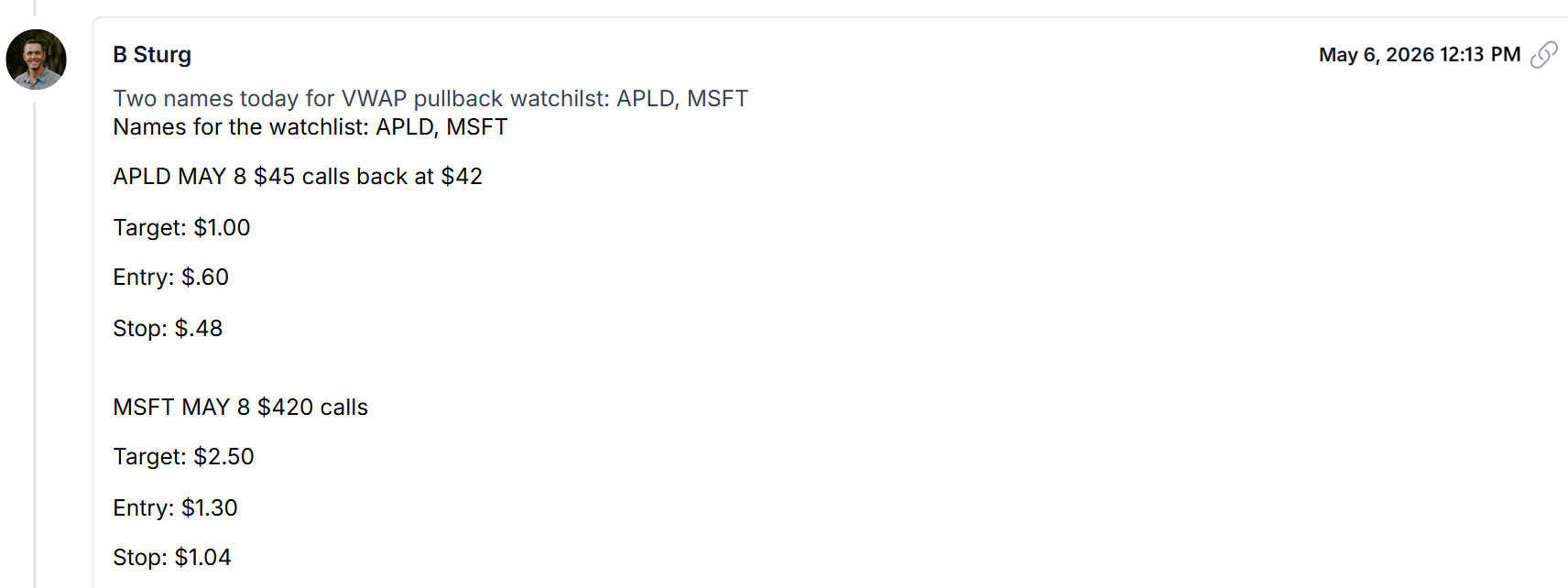
“Two names today for a VWAP pullback watchlist: APLD, MSFT.”
👉 Learn my full trade process.
That’s it. Two tickers with one pattern.
I’m always watching for stocks that gap up, run hard out of the open, then pull back to a specific area on the chart.
If they reach that level, the trade triggers. If they never come back to test it at all, it’s a non-trade and I move on.
The rules are simple. But you’d be surprised how many people refuse to follow the rules…
The “level” I’m talking about is VWAP. Volume Weighted Average Price. It’s the single best read I’ve found for who’s in control of a stock during the day.
What VWAP Tells Me
VWAP measures the average price that shares are traded at, weighted by intraday trading volume.
When the price holds above VWAP, the buyers are winning. They’re absorbing every dip and lifting the stock higher.
When the price falls below VWAP and can’t recover, the sellers have taken over.
My favorite intraday setup comes from one specific moment: a strong stock pulls back to VWAP for the first time after an opening run. If it consolidates at that level, it could mean a bounce is coming.
That’s when I buy.
The MSFT Trade
Microsoft Corporation (NASDAQ: MSFT) was the VWAP winner on May 6.
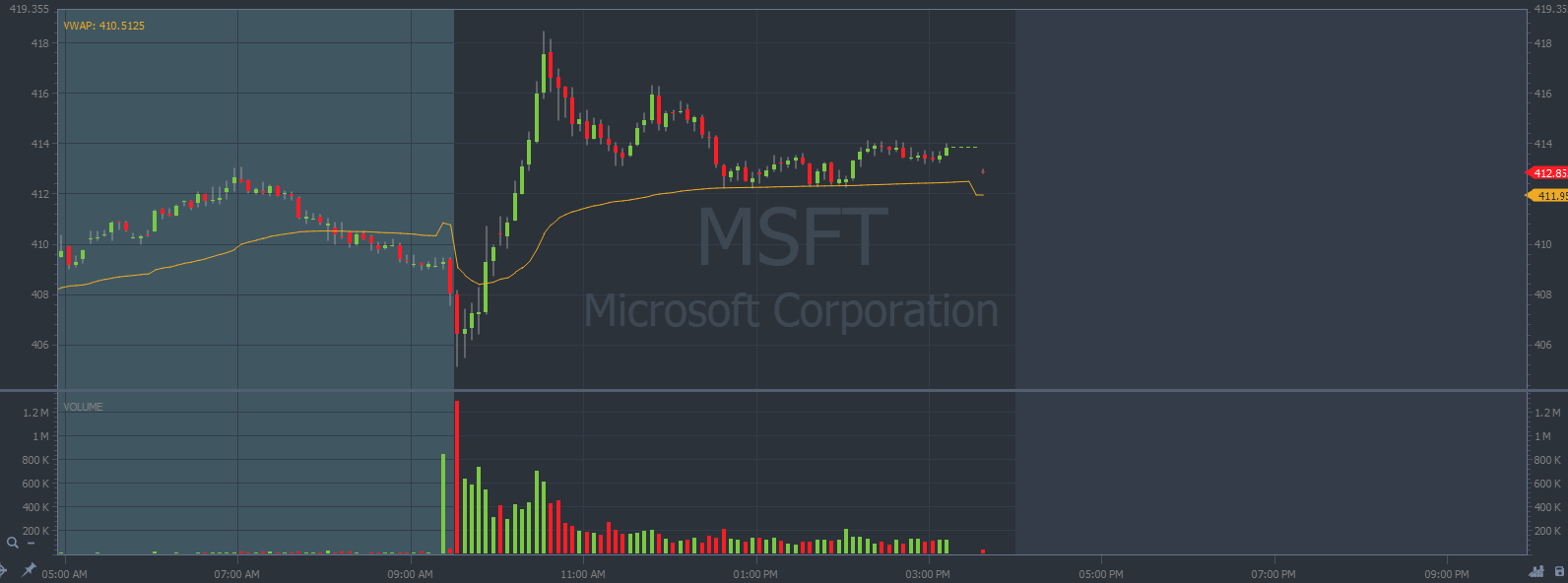
The stock spiked at the open and ran straight to $418 in the first hour.
That’s the kind of move that impatient traders love to chase. But I wasn’t chasing…
By midday, the stock sold off hard, dropping nearly $12 from the high. That’s where most people would panic and call it a failed runner.
But what happened next? The selling stopped.
VWAP rose to meet the price, and MSFT bounced right off it.
That’s the trigger. Pullback into VWAP, hold, bounce.
From there, MSFT spent the entire rest of the day grinding above VWAP. It never broke it. Every dip toward the line got bought up.
If you took the bounce off VWAP and used the line itself as your stop, you could have taken multiple trades from this setup before the closing bell rang.
The APLD Trade That Wasn’t
Applied Digital Corporation (NASDAQ: APLD) had great potential, but fell short… kind of.
Look at the chart and see if you can tell what went wrong:
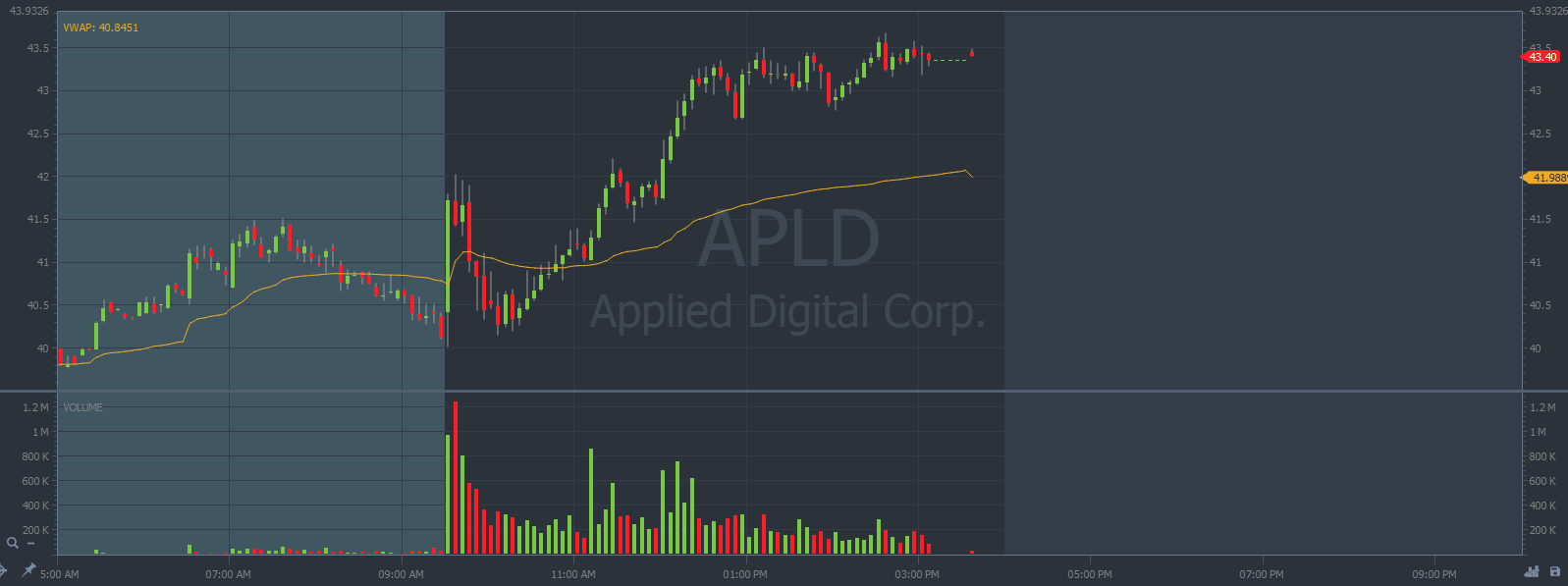
APLD surged higher intraday. So why wasn’t this a trade?
Because the pattern I sent to my students requires a clean pullback to VWAP after the run. APLD never pulled back. The stock continued to surge.
No retest, no entry. Period.
The Lesson Hiding In The Non-Trade
Watching APLD run all afternoon without being in it can break weak traders.
They start changing their rules mid-day. They abandon the setup they planned and chase the move that’s already gone.
They turn a non-trade into a loss because they couldn’t sit still.
Patient people take money from impatient people. Every single day.
A trade plan only works if you’re willing to walk away when the conditions don’t show up.
APLD didn’t trigger a trade. And MSFT did. That’s the entire game.
How To Use VWAP for Your Account
Three rules I’d give anyone trying to use this in their own trading:
- Mark VWAP on every intraday chart you look at. It should be one of the first lines you add. Most platforms have it built in.
- Wait for the test. Don’t enter on the gap. Don’t enter on the spike. Wait for the stock to pull back to VWAP and show you whether the buyers are still there.
- Use it as your stop. If the stock loses VWAP after your entry and can’t reclaim it, the trade is over. Don’t argue with the chart.
I alerted two stocks with the same pattern.
One worked. One didn’t.
That’s the pattern doing its job. And it should inspire you to follow the rules.
Be good (and be good to others),
Ben Sturgill
*Past performance does not indicate future results. Not typical.