I doubled one of my trading accounts over the last three weeks.
Not by trading at the right time…
By not trading at the wrong time.
I didn’t catch the exact bottom. I didn’t perfectly time the SPY reversal.
I just waited for three specific signals to confirm the market was shifting…
Once all three aligned, I bought calls aggressively.
One standout was Amazon.com, Inc. (NASDAQ: AMZN) August 21 $250 calls. I got in at $7.50 and took my final scale at $24.50 … 226% gains.*
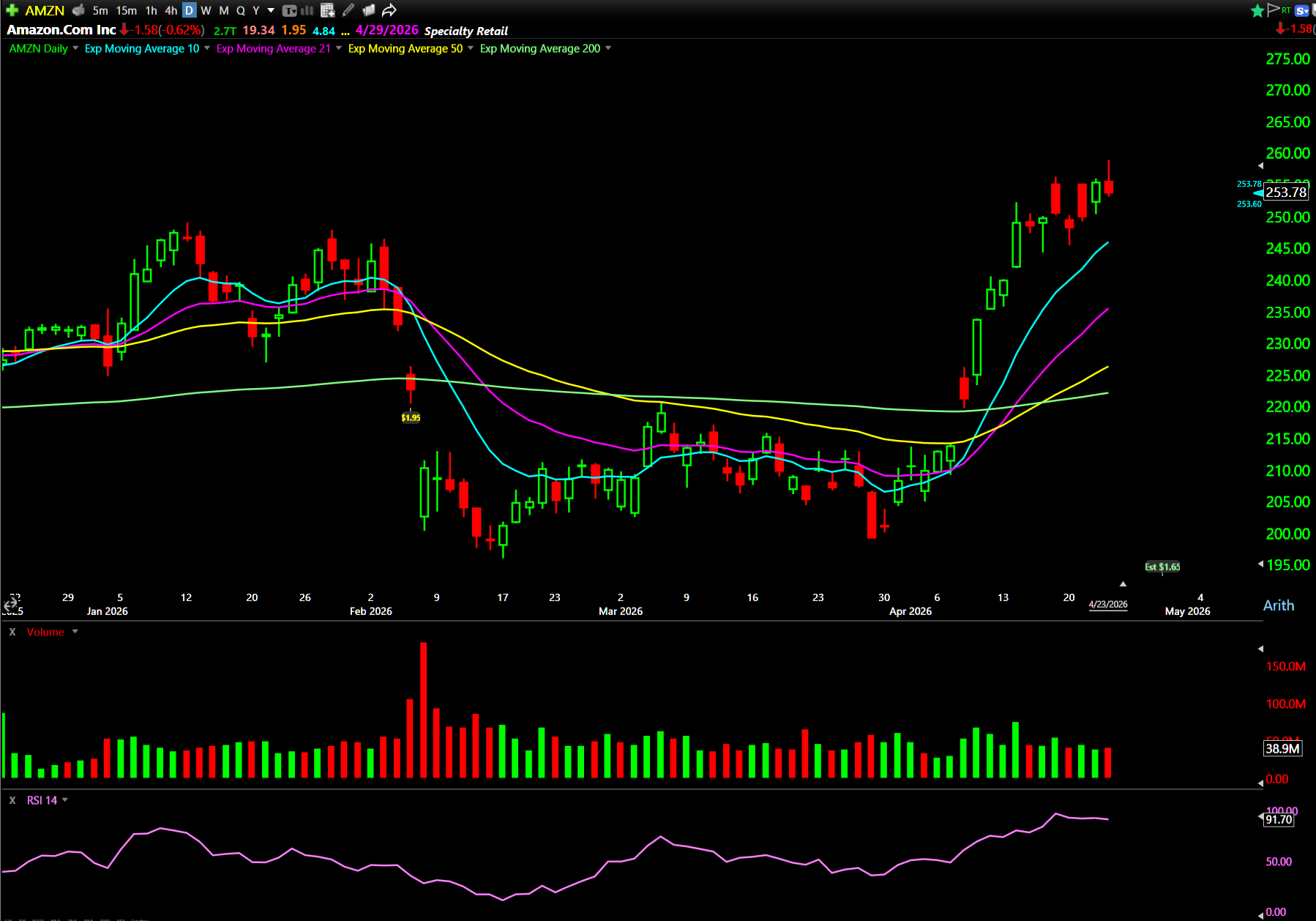
That win (plus a few others) led to my trading account increasing over 100% in April.*
I’m going to show you the three signals I used, why they work, and why understanding them matters way more than being right about direction.
[The 3 Signals]
The Hardest Part of Trading
The hardest part of trading is not trading.
When the market is falling, the temptation can be overwhelming.
You see a name down 15% from highs and think it’s a bargain.
You buy the dip, it dips more. You average down, it dips again.
By the time the actual bottom hits, you’re out of capital, out of patience, and emotionally destroyed.
Sound familiar? Listen…
I didn’t do any of that. I sat on my hands. I watched the Iran war headlines. I watched the VIX spike above 30.
And I waited for these three signals to confirm it was time to buy calls…
Signal #1: VIX Breaking Its Uptrend
The VIX had been in an uptrend since Christmas. Higher lows. Flat top around 30. Every time it pulled back, it bounced.
That uptrend told me the market wasn’t ready. Fear was the dominant force. Buying calls in that environment is how you lose money, even when you’re right about direction.
In early April, the chart started to show signs of slowing. And in mid-April, it completely broke the uptrend.
It made a lower high (and failed to hold the prior low).
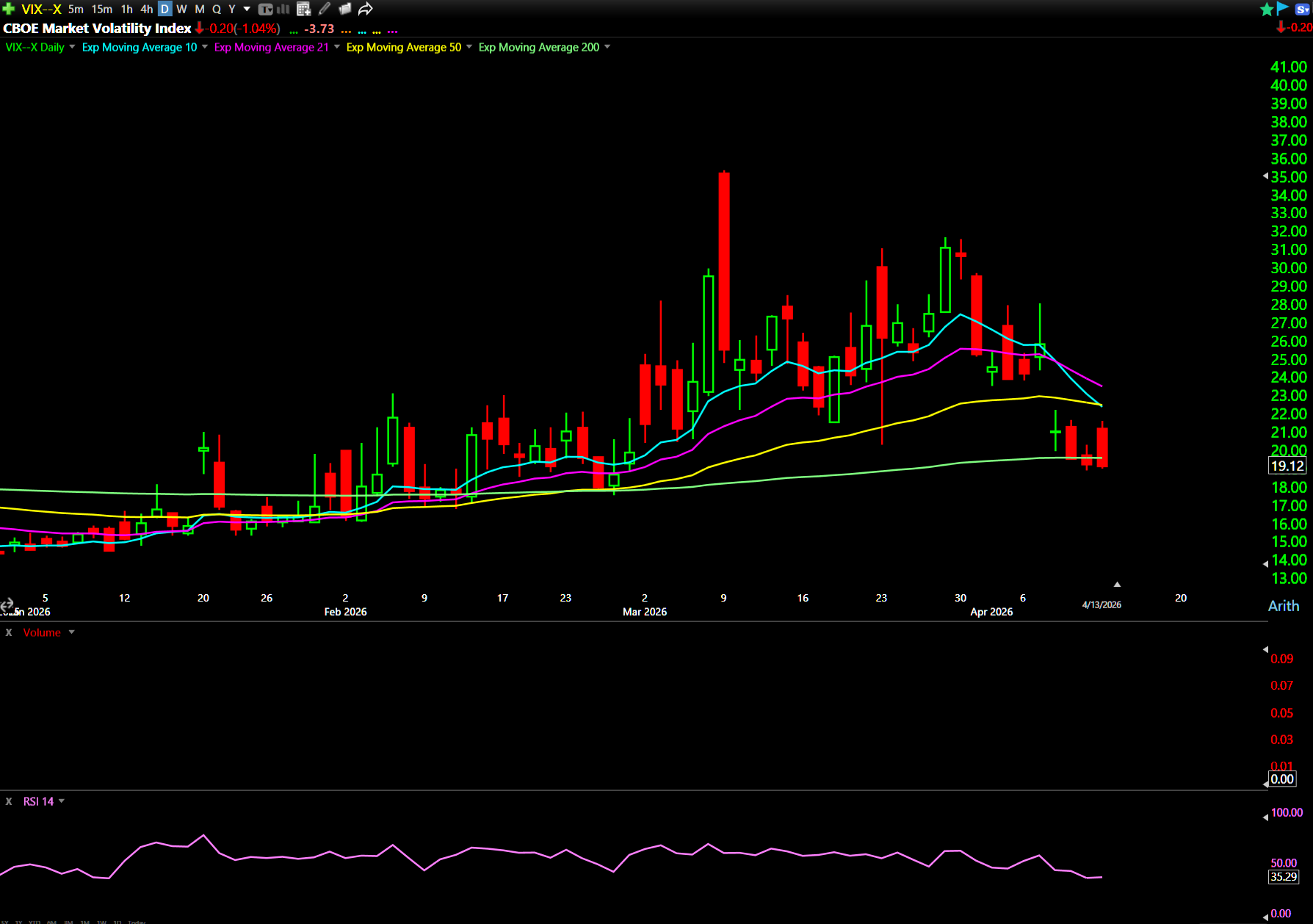
That was my first signal.
Signal #2: SPY Trading Above The Averages (And Holding)
The second signal was the market structure itself.
SPY had been trading below key moving averages for weeks. Every bounce got sold. Every attempt to reclaim the mean failed.
Then SPY broke above the mean and held. It didn’t just poke above and get rejected. It closed above. Opened above the next day. Held support.
That told me buyers were back. The structure was changing.
The market was building a base.
Signal #3: The Speed Of The Move
The third signal was the acceleration of the major index moves.
Once SPY confirmed the structural change, the speed of the move told me everything I needed to know.
The market didn’t grind higher slowly. It ripped. 10% in 10 days. That kind of speed doesn’t happen in normal rallies. It happens in short squeezes.
Shorts who positioned for more downside during the Iran war selloff were getting squeezed out. Funds sitting in cash were scrambling to get back in. FOMO was kicking in.
That acceleration was signal three. That’s when I got aggressive.
I didn’t catch the exact bottom. I wasn’t the first person in. I didn’t need to be.
By the time all three signals confirmed, the easy money was still on the table. The VIX had broken down. SPY had reclaimed structure. The move was accelerating.
I loaded up on calls. Aggressively enough that when the squeeze happened, I captured it.
Three weeks later, my account had doubled.
Why Patience Pays
Following my rules saved me from entering aggressive call positions too early (and set me up to make amazing gains when the reversal happened).
Sitting on your hands during a drop is harder than taking a trade. Watching the market fall without doing anything feels like you’re missing out.
It feels like you’re being too cautious. It feels like you should be doing something…
But doing nothing is doing something. Cash is a position.
Traders who can’t handle that buy too early. They get shaken out. They lose money on a move they were right about.
I waited. My rules kept me out until the turn was confirmed. Then my rules got me in aggressively once the signals aligned.
Remember: You don’t need to catch the exact bottom. Even catching a portion of these major index gains could’ve delivered month-defining wins.
Patient traders take money from impatient traders. Disciplined traders take money from people who can’t sit still.
The market just spent three weeks handing out money to anyone who could wait for their signals and then get aggressive when it mattered.
Patience is a virtue.
Remember that next time you’re watching a stock (or the entire market) drop, trying to decide when to enter.
Be good (and be good to others),
Ben Sturgill
*Past performance does not indicate future results