Good morning, traders…
You open up your brokerage platform in the morning and see a setup that checks all of your boxes.
The stock has huge Smart Money volume coming in, a beautiful chart, and a bullish news catalyst thrown in for good measure…
But just as you’re about to place your order, a little voice in your head whispers feelings of fear, uncertainty, and doubt.
Instead of focusing on why the setup is promising, you start grasping for reasons why you shouldn’t trade it.
So you pass on the setup.
A few days later, those contracts are 3x higher than where you would’ve bought them.
You’re left wondering, “How did I miss that move?”
It wasn’t your strategy. It wasn’t your chart reading. It wasn’t the market stacked against you…
It was your fear of losing.
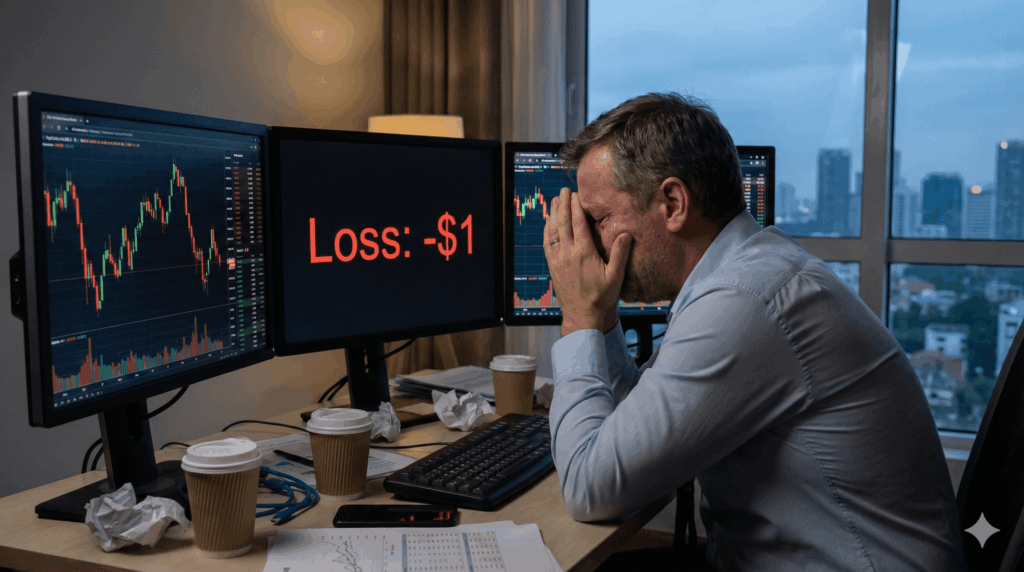
You must work your hardest to avoid this blind spot … because trading scared is a surefire way to fail in the markets.
If you’re too fearful to enter those perfect, box-checking setups, you’ll never make meaningful gains. Period. End of story.
The best traders are fearless in the face of a great setup. They trust their process and stick to their strategy no matter what the temporary voices in their head say.
In the science fiction classic Dune, author Frank Herbert wrote:

But for you, “Fear is the account-killer.”
Let’s overcome the fear of losing, once and for all…
Define Your Risk Before You Enter the Trade
Fear thrives in uncertainty. If you don’t know how much you’re willing to lose before you click enter, you’ll always feel unsettled.
Pre-set your risk: entry, stop loss, and target. Write it down or enter it into your platform before the trade is live.
Determining your risk tolerance ahead of time puts you back in control.
Size Small Enough That You Can Think Clearly
If your position size makes you sweat before the trade even starts, it’s too big.
You can’t trade your plan if you’re emotionally overwhelmed.
Keep your sizing small, so it almost feels boring. That’s how you build real confidence and consistency.
Track Your Setups (Even the Ones You Skip)
Every time you pass on a setup, log it. Write down why you skipped it and what the trade would’ve done.
Over time, you’ll see whether those fears were valid or just noise. You’ll also build a file of “I should’ve taken that” trades.
Tracking your trades gives you powerful data. Use it.
Review Your Winners
Most traders obsess over what went wrong. But if you’re scared to enter good setups, what you need is proof that your edge works.
Revisit your best trades. Study them.
Remember how they looked when you entered, how you felt, what the chart showed, and why you trusted it.
Repetition helps rewire your confidence.
Create a Pre-Trade Routine
Fear likes to sneak in when you’re rushing. But there’s a simple way to avoid this…
Create a repeatable pre-trade routine: check the setup, confirm volume, assess news/catalyst, define your risk … and then, take a deep breath.
Meditate on why you’re taking the trade. Some traders even say their rules out loud before entering.
Whatever centers you, use it.
Accept That You Will Lose
Losses don’t mean you did something wrong. They’re part of the game. The sooner you make peace with that, the less power fear has.
A well-managed losing trade is a win in disguise. It means you followed your plan. And that’s how you keep the highest probability of success.
Trust Your Process More Than the Outcome
Scared traders obsess over what might happen. Skilled traders focus on following their process.
You can’t control whether a trade wins or loses. You can control whether you stuck to your plan (and whether it met your criteria).
You don’t have to eliminate fear completely to trade well. You just need to stop letting it hijack your decision-making.
The next time you see a setup that checks all your boxes, don’t let hesitation steal the opportunity.
You’ve done the work. Trust it.
Happy trading,
Ben Sturgill
*Past performance does not indicate future results