“Wouldn’t it be nice?”
That’s how I opened my live session yesterday: a little Beach Boys before the biggest catalyst of the month.
How I’m trading it.
Fun fact: my mom swears my first words were “Ba, ba, ba, ba, Barbara Ann.” So yeah, the Beach Boys and I go way back…
But that song hits a little differently in this market.
- Wouldn’t it be nice if the market stopped chopping?
- Wouldn’t it be nice to have some certainty on inflation, interest rates, and the election?
- Wouldn’t it be nice if stocks went up every single day?
Yesterday, the Fed made its decision. Today, the market has to digest it.
Most traders will jump at the first big candle they see. That’s exactly how the whipsaw gets them.
I’m approaching it differently…
It starts with a pattern I’ve spotted after the last two Fed meetings.
How We Got Here
To understand yesterday’s decision, we have to rewind to January.
Inflation looked tame. The labor market looked shaky. Rate cuts in 2026 seemed like a lock.
But the economy had other plans.
Hiring held up, with unemployment hovering near 4.3%. The war in Iran pushed crude above $100 a barrel, and the AI spending boom added more fuel to the inflation fire.
That’s the mess Kevin Warsh inherited when he became Fed chair in May. Trump picked Warsh expecting lower rates. Instead, Warsh has acted independently.
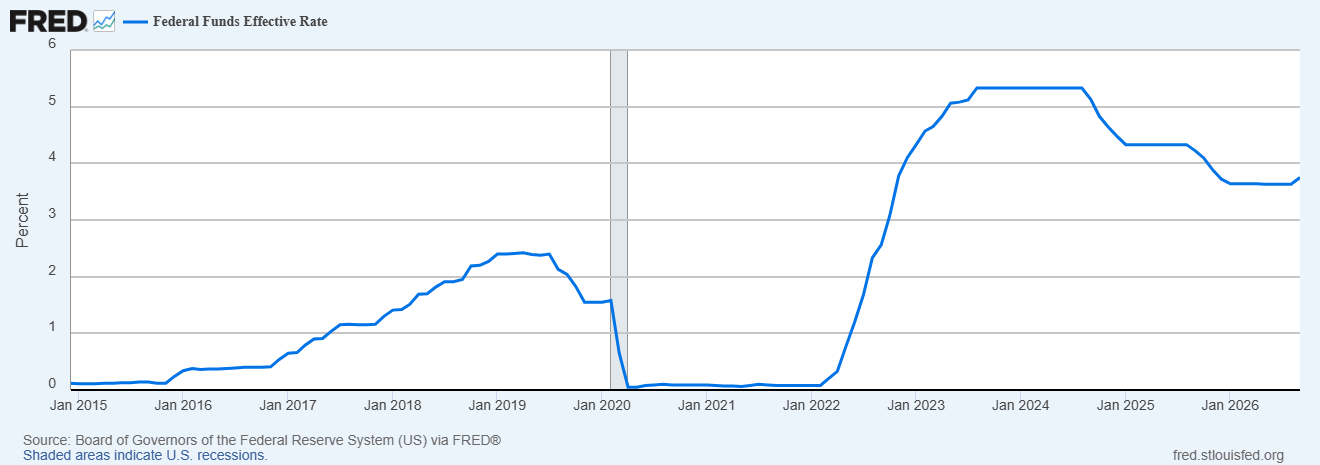
In September, the Fed raised rates for the first time since 2023, to 3.75%–4%. The vote was unanimous.
Trump wasn’t happy.
Then inflation pushed higher. September consumer prices rose 3.7% from a year earlier. Wholesale prices jumped 6.3%, the biggest gain since 2022.
And the timing couldn’t be worse. Midterms are November 3. A hike before the election would act as a political grenade.
Heading into the meeting, traders priced in roughly 86% odds of a hold, with a December hike looking much more likely.
And yesterday, the Fed held rates steady at 3.75%–4%.
But the decision itself was never the real story.
The real catalyst is Warsh. Unlike past Fed chairs, he refuses to telegraph his next move. So any hint about December, in either direction, can swing the market drastically. And that reaction doesn’t end after yesterday’s after-hours.
It spills into today.
How I Trade the Day After
Fed days play out in three stages:
- 9:30 to 2:00: Chop. Everyone waits for the announcement.
- 2:00 to 2:30: The market reacts to the statement.
- 2:30 into the next day: The market responds to the press conference.
Look at the last two meetings. On July 29 and September 16…
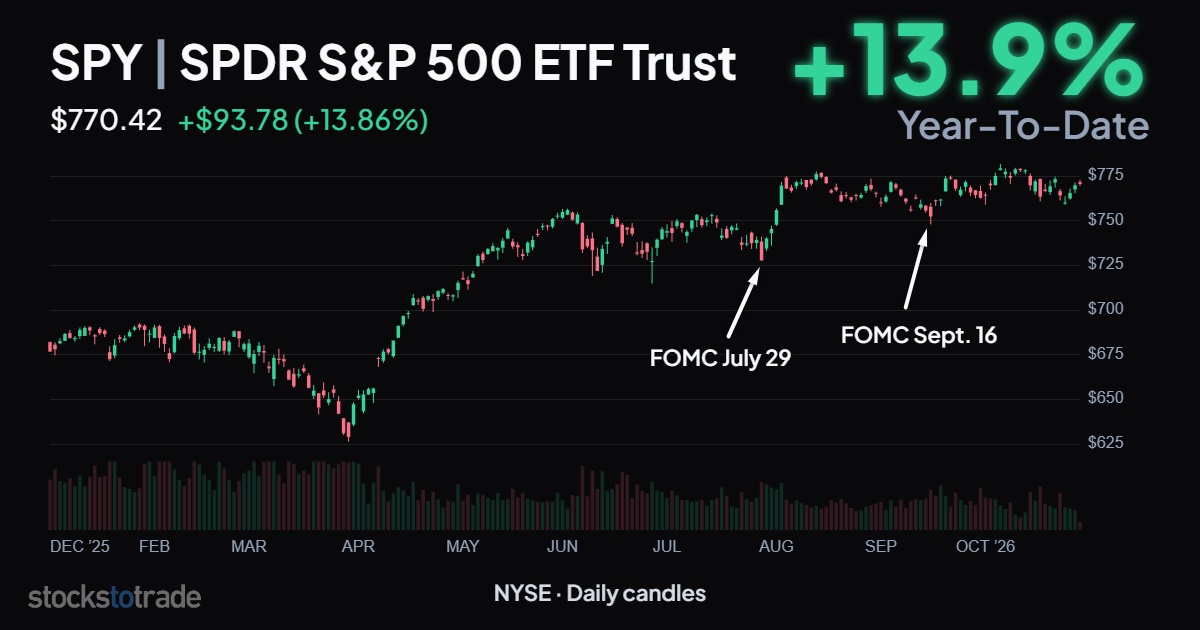
The move on the day of the announcement doesn’t give us the best idea of the direction. The real sentiment shows up after the press conference, and it carries into the next few sessions.
So here’s my plan for today.
Step 1: Identify the direction. Is the SPY breaking out of its consolidation range and holding? Or is it still in the chop? I don’t guess. I let the chart show its hand.
Step 2: Trade with it. I’m looking for bullish setups in one of two ways. If the market breaks out, I join the run on a pullback. If it drops, I wait for price to hit clear support, then trade the bounce.
That’s exactly what I did with NVIDIA Corp. (NASDAQ: NVDA) earlier this week. Support held in the morning, and I played an intraday bounce.
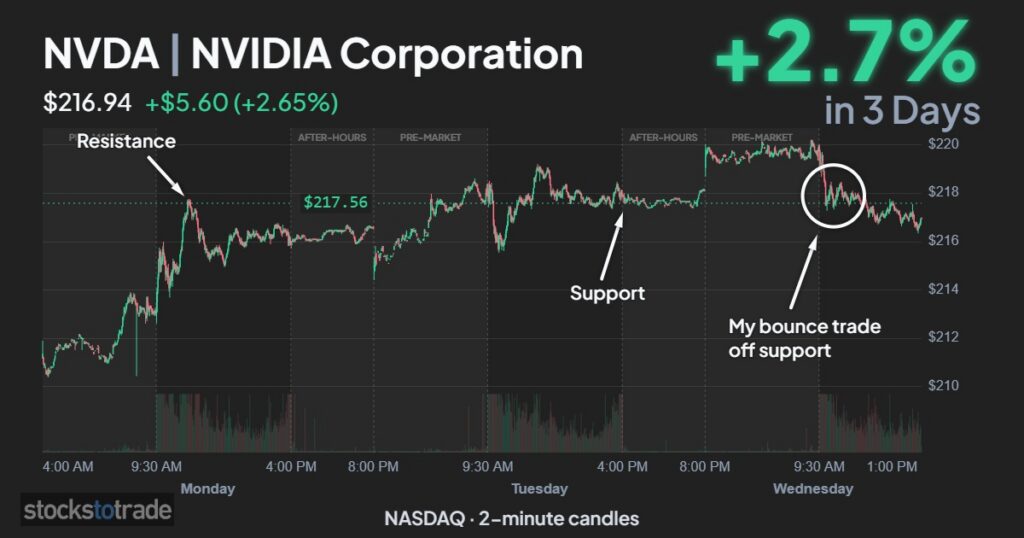
Step 3: Keep it tight. Until the market picks a real trend, I’m day trading ONLY, not swinging with size.
I’m using clear levels, tight stops, and I want at least 4:1 reward to risk.
The Fed gave us its answer yesterday. Now the market will show us its reaction.
Take what the market gives you, not “wouldn’t it be nice”.
Be good (and be good to others),
Ben Sturgill
*Past performance does not indicate future results. Not typical.