
I did something in my 20s that should have killed me…
The nurse told me so herself. Three or four times, actually.
The reason I did it: the same reason most traders blow up their accounts.
Don’t die. Don’t blow up your account.
Stock trading is more about life than most people realize. There are ups, downs, and risks that could wipe you out completely.
But there are paths to success too.
And deep down, you already know how to get there…
How You Know What You Know
When I was in seminary, I picked up a word: epistemology.
It’s the study of how we know what we know.
You know things. But how do you know them? Where did that information come from?
Think of your brain as a set of shelves. One shelf for basketball. One for the markets. One for how to fix a leaky faucet. Etc.
When a situation comes up, your brain walks over, grabs whatever’s on the relevant shelf, and uses it.
The problem is, most of us have no idea who stocked the shelf.
It’s like opening your pantry and finding a jar of kumquats. Who bought this? I didn’t buy this.
And if you don’t know where the knowledge came from…
It’s possible the thing you’re certain about isn’t actually true. It’s just the only thing on the shelf. So that’s what you reach for.
That’s a problem in life as well as trading.
The Spider, the Swelling, and Hitch
I came back from Europe in my 20s obsessed with motorcycles. Everybody over there rides one. So I bought one, to my wife’s chagrin, and kept it in the barn we were renting at the time.
One day I rode it out, got where I was going, and somebody looked at me funny.
“Are you okay?”
“What do you mean, am I okay?”
“Your face is swelling.”
I went and looked in the mirror. Sure enough, my face was ballooning.
Turns out there was a spider on the motorcycle. It bit me on the spine and I never felt it.
So what did I do?
I went to the only shelf in my brain that I had. And the only place I’d ever seen a man with a swollen face was the movie Hitch.
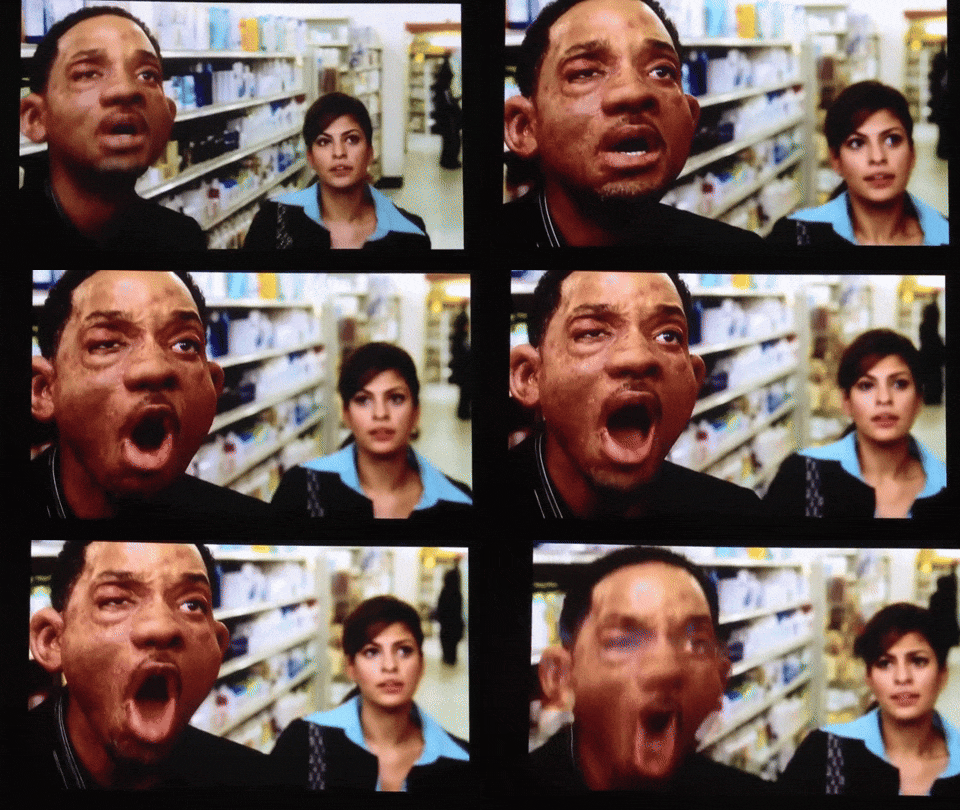
What did Hitch do about his allergic reaction?
He put a straw in a bottle of Benadryl and drank it like a sports drink.
So I drove to the store, bought a bottle of Benadryl, and drank half of it.
I’m not proud of this.
I subsequently passed out. My wife came home, saw the bottle, and drove me to the doctor. The nurse kept asking if I’d really taken it all at once. I finally asked her why she kept asking me.
She said, “because you should be dead.”
I survived because I’m a big guy. That’s it.
Who Stocked Your Trading Shelf?
Now ask yourself the uncomfortable version of that question.
Where did you learn what a good trader looks like?
Because I’d bet money it wasn’t from a mentor sitting next to you for five years. It was from social media. YouTube. Ads in your feed. Screenshots of six-figure days posted by people who conveniently never screenshot their losing days.
And what did those sources put on your shelf?
They taught you that growing an account means nothing but wins. Big wins. Back to back to back.
That the best traders never make mistakes. And if you’re making mistakes, it’s because you’re not ready.
That’s the Benadryl bottle. That’s the movie logic. And when the market doesn’t cooperate, you reach for it, because it’s the only thing on your shelf.
Here’s what people in your feed won’t tell you: everything of value takes time, and everything of value is uphill.
My marriage took time. Raising my sons takes time. Getting to play basketball professionally took years.
Everyone sees the summit photo from Everest. But we don’t see the four months it took to get there.
This Number Should Make Your Brain Hurt
Strati runs Tim Sykes’ inner circle. He’s the guy Sykes trusts with his highest-paying students.
He loses two out of every three trades. And he’s made over $1 million.*
Does that make your brain hurt? If it does, that’s fine. But it means something on your shelf needs to be thrown out and replaced.
Trading isn’t about being perfect. It’s about how much you lose on your losers and how much you win on your winners.
Control your losses. Let your winners run.
And never rely on Hollywood for advice.
Be good (and be good to others),
Ben Sturgill
*Past performance does not indicate future results. Not typical.